Your company may not be trading, but that doesn't mean its filing responsibilities have stopped. Here's what UK directors need to know. Imagine registering a limited company with plans to launch a business, only to decide that the timing isn't right. Perhaps you're waiting for funding, developing a product, or simply keeping the company registered for future use.
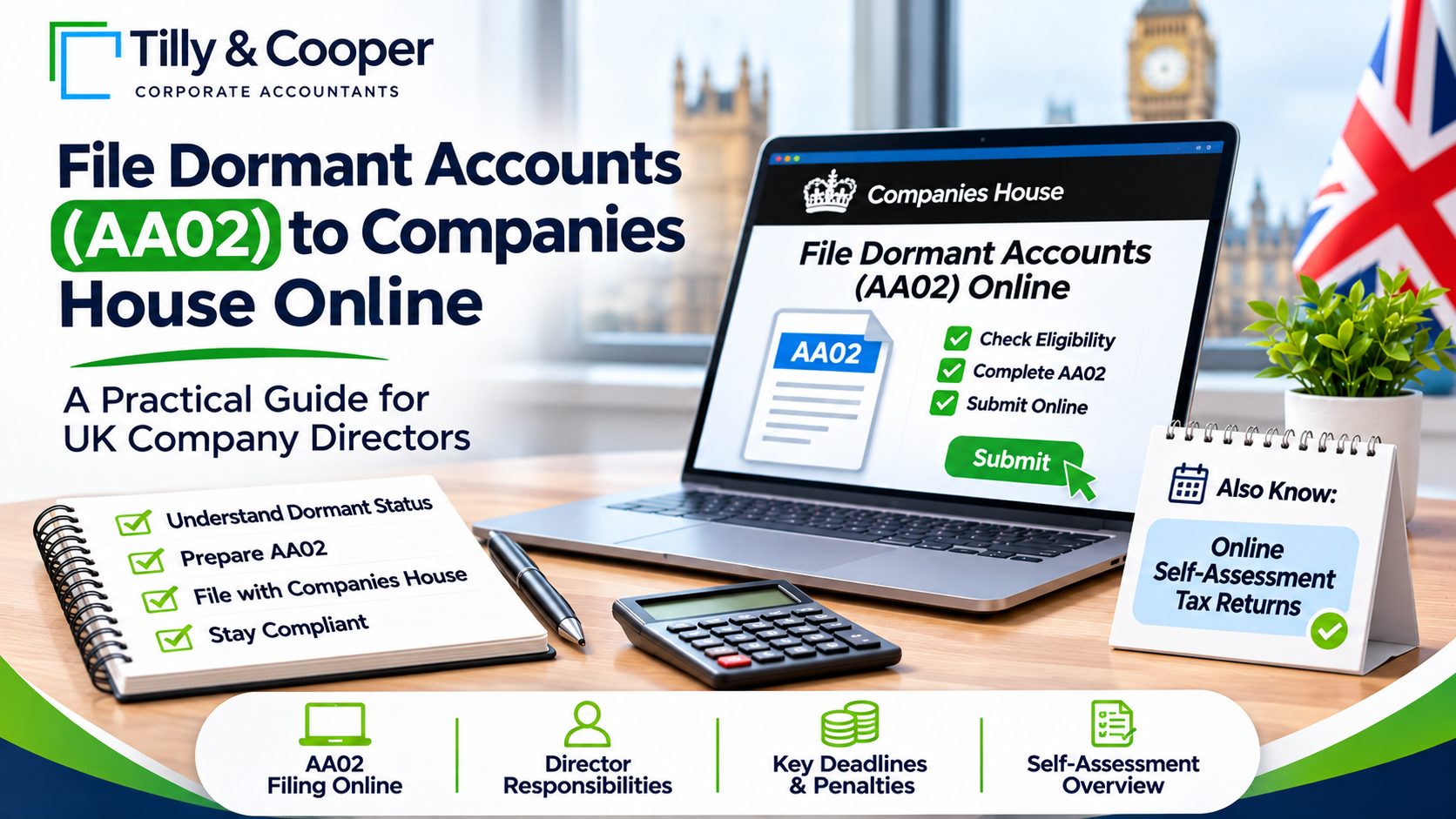
No customers. No sales. No trading activity. It would be easy to assume that a company with no business activity has nothing to report. However, Companies House requires registered limited companies to submit annual accounts, even when they are dormant. The good news is that eligible companies can use a simplified filing process. Understanding how to File Dormant Accounts (AA02) to Companies House Online can help directors meet their legal obligations without unnecessary paperwork.
But before starting, it's important to understand what dormancy means, which companies qualify, and how these accounts differ from personal tax obligations such as Online Self-Assessment Tax Returns.
What Does Dormant Mean for a UK Limited Company?
A company is generally considered dormant by Companies House when it has had no significant accounting transactions during the relevant financial year.
A significant accounting transaction is one that would normally need to be recorded in the company's accounting records.
For example, a newly incorporated company that has never sold products, provided services, or incurred ordinary business expenses may qualify as dormant.
However, certain transactions are disregarded when assessing dormancy, including qualifying Companies House filing fees and payments for subscriber shares during incorporation.
This distinction matters because even a small transaction can potentially affect whether dormant accounts are appropriate.
A company that has traded previously but subsequently stopped operating may still qualify as dormant for a later accounting period. However, it may need to prepare a different set of dormant accounts rather than use the simplified AA02 form.
What Is Form AA02?
Form AA02 is a simplified dormant company accounts form associated with Companies House.
It is intended for eligible companies limited by shares that have never traded and meet the relevant conditions.
Instead of preparing more detailed trading accounts, qualifying companies can report limited financial information.
This generally includes the company details, balance sheet date, share capital information, relevant balance sheet figures, and the required statements.
Companies House also provides online filing facilities for eligible dormant companies.
The online process contains built-in checks to help directors avoid common errors.
It is important to remember that not every dormant company is eligible to use AA02. For example, a business that previously traded before becoming dormant may need a different form of accounts.
How to File Dormant Accounts (AA02) to Companies House Online
For a qualifying company, the process can be completed through the official Companies House online accounts service.
Step 1: Confirm Your Company's Dormant Status
Before preparing the accounts, review the company's financial activity during the accounting period.
Check whether the company received income, made purchases, incurred ordinary expenses, or entered into other significant accounting transactions.
If you are unsure whether an activity affects dormancy, obtain appropriate accounting guidance before submitting the accounts.
Step 2: Check Your Accounts Filing Deadline
Every registered limited company has an accounting reference date.
This date determines the end of its financial year and helps establish the filing deadline.
For most private limited companies, the first accounts are due 21 months after incorporation, while subsequent annual accounts are generally due nine months after the financial year ends.
The first filing deadline can be different if the company changes its accounting reference date.
Directors should confirm the exact deadline through their Companies House company record.
Step 3: Access the Companies House Online Service
Visit the official Companies House accounts filing service.
You will generally need your online filing credentials and the company's authentication code.
If you do not have the authentication code, request one through the official Companies House process rather than leaving the matter until your filing deadline approaches.
Step 4: Enter the Required Financial Information
Follow the online instructions and complete the applicable dormant accounts information.
Check the balance sheet figures, share capital details, accounting dates, and relevant statements.
Even where the company has no trading income or expenses, the financial information must accurately reflect its position.
Step 5: Review and Submit
Before submitting, check that the information is complete and the company qualifies for the chosen accounts format.
Once the submission is accepted, retain the acknowledgement for your company records.
You can also review your company's public filing history to confirm that the accounts have been recorded.
Does a Dormant Company Still Need to File a Confirmation Statement?
Yes.
This is a responsibility that business owners sometimes overlook.
A confirmation statement and annual accounts serve different purposes.
Dormant accounts report the company's qualifying financial position, while a confirmation statement verifies information held on the Companies House register.
Even a company that has never traded must generally continue submitting confirmation statements while it remains registered.
These filings may involve different deadlines and procedures.
For further guidance, read Tilly & Cooper's article on How to File a Confirmation Statement (CS01) in the UK.
Maintaining both filings helps keep the company's public record up to date.
What About Corporation Tax for a Dormant Company?
A company can be dormant for Companies House purposes and have a separate status for Corporation Tax.
HMRC applies its own rules when determining whether a company is dormant.
For example, a company may not be trading but could still have financial activities that affect its tax status.
Where HMRC recognises a company as dormant for Corporation Tax, it will not normally require Company Tax Returns for the dormant period.
However, if HMRC issues a notice requiring a Company Tax Return, the company must address it rather than assume that dormant status automatically removes the obligation.
This is why directors should check both their Companies House records and HMRC correspondence.
Dormant Accounts and Online Self-Assessment Tax Returns: What's the Difference?
Although both involve financial reporting, dormant company accounts and personal Self Assessment returns are separate obligations.
FeatureDormant Company AccountsSelf Assessment Tax ReturnsResponsible authorityCompanies HouseHMRCMain purposeReport a qualifying dormant company's financial positionDeclare relevant personal income and tax liabilitiesTypical filerLimited companyIndividual taxpayerFiling basisCompany financial yearPersonal tax yearOnline submissionCompanies House filing serviceHMRC or compatible tax softwareA limited company director does not automatically need to complete a personal Self Assessment return simply because they are a director.
However, a director may need to submit one because of their personal income circumstances or because HMRC has issued a notice to file.
For the 2025–26 tax year, the standard deadline for Online Self-Assessment Tax Returns is 31 January 2027.
Therefore, someone who owns a dormant company might still have a personal tax return obligation because of separate rental income, self-employment, investment income, or other relevant circumstances.
The key point is that filing dormant company accounts does not replace a personal tax return where one is required.
What Happens if You Miss the Dormant Accounts Deadline?
Dormant companies can face late filing penalties just like trading companies.
For private limited companies, the standard late accounts filing penalties are:
How late the accounts arePenaltyUp to 1 month£150More than 1 month, up to 3 months£375More than 3 months, up to 6 months£750More than 6 months£1,500Penalties can double when accounts are filed late in two consecutive financial years.
Persistent failures can also lead to more serious enforcement action, including potential strike-off proceedings.
This makes it important to monitor filing dates even when the company has no active operations.
When Should You Seek Professional Accounting Support?
Some dormant companies have straightforward records and can file their accounts independently.
Other situations require closer examination.
For example, a company may have stopped trading but still own equipment, hold cash, or have outstanding liabilities.
Directors might also be unsure whether previous transactions prevent the use of AA02.
Professional accounting support can help determine the correct filing approach, review outstanding obligations, and prepare suitable accounts.
For businesses looking for help with company reporting and statutory compliance, Tilly & Cooper provides UK corporate accounting and company administration services.
Obtaining guidance before submission can help prevent incorrect filings and unnecessary complications.
Frequently Asked Questions
1. Can I file dormant company accounts online?
Yes. Eligible UK limited companies can submit dormant accounts using Companies House's online filing services. The appropriate filing method depends on the company's circumstances and the type of accounts required.
2. Is Form AA02 suitable for every dormant company?
No. The simplified AA02 form is generally intended for qualifying companies limited by shares that have never traded. Companies that became dormant after trading or have more complex circumstances may need to prepare different dormant accounts.
3. Does a dormant company need to pay Corporation Tax?
A company that is genuinely dormant for Corporation Tax purposes will normally have no Corporation Tax liability arising from trading during that dormant period. However, directors must check HMRC requirements and respond to any notices to file.
4. Are dormant accounts required every year?
Yes. Most registered limited companies must continue submitting annual accounts to Companies House even if they are not trading.
5. Do company directors have to file Online Self-Assessment Tax Returns?
Not automatically. The requirement depends on personal tax circumstances and HMRC obligations, rather than simply holding the position of director.
6. Can I file dormant accounts without hiring an accountant?
Yes. Companies House provides online filing facilities that eligible companies can use directly. Professional assistance may be helpful when the company's financial position or dormancy status is unclear.
7. What happens when a dormant company starts trading again?
The company's accounting and tax position changes when it resumes business activities. Directors should notify HMRC where required and ensure the next Companies House accounts reflect the company's actual activities.
Final Thoughts
A company may be inactive, but its statutory responsibilities do not automatically disappear.
Knowing how to File Dormant Accounts (AA02) to Companies House Online can help directors maintain accurate public records, avoid late filing penalties, and keep their business ready for future activity.
At the same time, understanding the difference between corporate filings and Online Self-Assessment Tax Returns prevents confusion between company obligations and personal tax responsibilities.
Whether you're keeping a company dormant temporarily or planning to restart trading in the future, organised records and timely submissions provide a stronger foundation for managing its legal responsibilities.