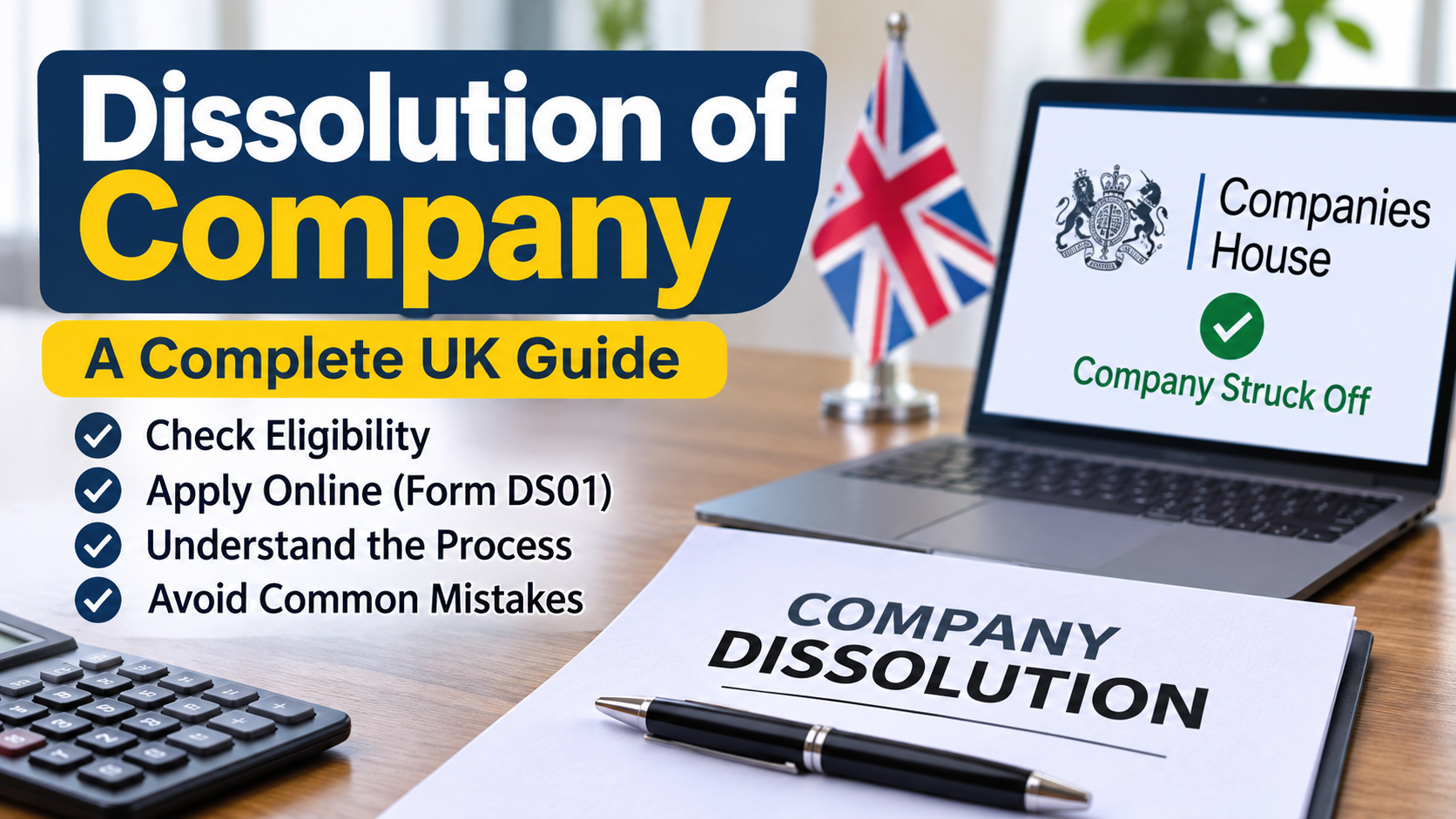
Closing a company involves several important legal and administrative responsibilities. Every business eventually reaches a point of change. Some businesses stop trading because their owners retire. Others close because commercial circumstances have changed.In the United Kingdom, company dissolution offers a formal closure process. It allows eligible businesses to leave the Companies House register. This process is commonly called voluntary strike-off.Understanding dissolution helps business owners avoid unnecessary complications. It also helps prevent unexpected legal and financial problems.Many directors want to understand how to dissolve a company. Others prefer to dissolve a company online. Both approaches require careful preparation and compliance.This guide explains the dissolution of company procedures in Britain. It covers eligibility, applications, responsibilities, costs, and possible consequences. It also explains common mistakes directors should avoid.
What Is Dissolution of Company?
Company dissolution means removing a company from the official register. Companies House maintains this register for UK incorporated businesses. Once dissolved, the company no longer legally exists.Dissolution usually happens after a company stops trading. Directors can apply for voluntary strike-off when eligible. This provides a simpler alternative to formal liquidation.However, dissolution is not suitable for every business. Companies with outstanding debts need particular attention. Directors must also consider creditors and remaining assets.
Why Do Companies Choose Dissolution?
Businesses close for several different reasons. Some companies become inactive after completing their original purpose. Others stop operating because their owners pursue different opportunities.
Common reasons include:
Retirement of company directors or shareholders.
Permanent closure of business operations.
Completion of a particular business project.
Changes in commercial or financial circumstances.
No continuing need for the company.
Restructuring of business activities.
Dissolution can provide a straightforward closure route. However, directors must satisfy the relevant legal requirements first.
How Does Company Dissolution Work in the UK?
The dissolution process follows specific legal requirements. Companies Act 2006 provides the relevant statutory framework. Companies House administers voluntary strike-off applications.Directors normally submit an application using Form DS01. The application requests removal from the Companies House register.Companies House reviews the submitted application. It then publishes a notice in the relevant Gazette. This publication allows interested parties to raise objections.If nobody objects, the company may eventually be dissolved. The process normally takes at least two months after publication. Objections or administrative issues can extend this period.
Understanding Voluntary Strike-Off
Voluntary strike-off is a common dissolution method. It is available to eligible companies meeting statutory conditions.The company must generally have stopped trading recently. It must also satisfy restrictions concerning certain activities.A company cannot use this route in every situation. Directors should check eligibility before submitting their application.
Who Can Apply for Company Dissolution?
Company directors normally submit the strike-off application. All directors must approve the application before submission.A majority of directors must sign the application. Directors should confirm the current signing requirements beforehand.The company must also satisfy the statutory eligibility conditions. Incorrect applications can cause delays or objections.
Eligibility Requirements for Dissolving a Company
Before applying, directors should examine their company's recent activities. Certain restrictions prevent companies from using voluntary strike-off.Generally, the company must not have traded recently. It must also avoid specific activities during the previous three months.
These restrictions help protect creditors and other interested parties.
When Is a Company Eligible?
A company may qualify when it:
Has stopped carrying on business activities.
Has not traded during the previous three months.
Has not changed its name recently.
Has not recently disposed of trading stock.
Is not involved in disqualifying insolvency proceedings.
Has no outstanding application preventing dissolution.
Directors should review the complete statutory requirements. Special circumstances may affect eligibility.
When Is Voluntary Strike-Off Not Available?
Certain circumstances prevent voluntary dissolution applications.For example, companies cannot apply while undergoing certain insolvency proceedings. A company also cannot use strike-off to avoid creditor claims.Recent trading activities may also make an application unsuitable. Directors should seek professional guidance when uncertain.
How to Dissolve a Company Online
Many directors prefer online applications for convenience. Companies House provides an online filing service. Eligible companies can use this service for voluntary strike-off.Understanding how to dissolve a company online helps avoid mistakes. Preparation is essential before starting the application.
Step 1: Check Your Company's Eligibility
First, review the company's recent business activities. Confirm that it satisfies the statutory conditions.Check whether the company has stopped trading. Review any recent name changes or financial transactions.Also consider outstanding debts and legal obligations. These issues can affect the application.
Step 2: Inform Interested Parties
Directors must notify relevant interested parties. This includes creditors, employees, and shareholders where applicable.Other recipients may include pension trustees and employee representatives. Relevant government departments may also require notification.Notifications must follow the statutory timetable. Directors should retain evidence of their communications.
Step 3: Prepare the Required Information
Collect the company's identification and registration details. Check the directors' information carefully.Review the company's financial position before applying. Identify outstanding liabilities and remaining business assets.Make sure the application contains accurate information. Incorrect details can create unnecessary complications.
Step 4: Submit the Application
Eligible directors can submit Form DS01. Applications may be made through available Companies House services.The required directors must approve and sign the application. A filing fee may also apply.Check the latest Companies House instructions before submission. Requirements and fees can change over time.
Step 5: Wait for Gazette Publication
Companies House processes the submitted application. It then publishes the first notice in the Gazette.This notice informs interested parties about the proposed strike-off. Creditors can object when legitimate grounds exist.Directors should monitor correspondence during this period. Any objection may interrupt the dissolution process.
Step 6: Receive Confirmation of Dissolution
Companies House publishes a final Gazette notice. This confirms that the company has been dissolved.The company is then removed from the register. Its separate legal existence comes to an end.Directors should retain relevant company records. These may become important for future enquiries.
Documents and Information Required for Dissolution
Preparation makes the application process easier. Directors should gather relevant information before filing.
Commonly required information includes:
Company registration number.
Registered company name.
Registered office details.
Director identification and approval.
Completed Form DS01.
Payment of the applicable filing fee.
Additional documents may become necessary in unusual circumstances. Always follow current Companies House guidance.
How Much Does Company Dissolution Cost?
The cost depends on the chosen closure method. Voluntary strike-off is generally cheaper than liquidation.Companies House charges a filing fee for Form DS01. The current amount should be checked before applying.Professional assistance may involve additional charges. Accountants and legal advisers set their own fees.Other costs can arise during the closure process. These might include outstanding taxes or professional services.
Factors That Affect Dissolution Costs
Several factors influence the overall expense.
These include:
Companies House application fees.
Outstanding accounting responsibilities.
Unpaid corporation tax liabilities.
Professional accounting or legal advice.
Outstanding creditor payments.
Final employee payments and obligations.
Directors should calculate these costs before applying. Proper preparation helps prevent unexpected expenses.
What Happens to Company Assets After Dissolution?
Company assets require careful attention before dissolution. Any remaining assets may become bona vacantia.This Latin expression means ownerless goods or property. Such assets can pass to the Crown or relevant authority.
Examples include:
Money held in company bank accounts.
Commercial property owned by the company.
Vehicles registered to the company.
Intellectual property rights.
Outstanding refunds and other financial assets.
Directors should deal with assets before dissolution. Appropriate distributions must follow applicable legal requirements.
What Happens to Company Bank Accounts?
Company bank accounts can become affected by dissolution. Remaining balances may pass to the Crown.Banks may freeze accounts after learning about dissolution. Directors should resolve banking arrangements beforehand.Never assume remaining funds will automatically return. Professional advice can help protect legitimate interests.
Tax Responsibilities Before Company Dissolution
Tax responsibilities remain important during company closure. Directors must address outstanding obligations properly.The company may need to submit final accounts. Corporation Tax responsibilities must also be considered.VAT registration may require cancellation where applicable. PAYE arrangements also need appropriate attention.
Corporation Tax
Companies should settle outstanding Corporation Tax liabilities. Final tax returns may also be necessary.HMRC must receive accurate information about the closure. Directors should check outstanding tax correspondence.
VAT Responsibilities
VAT-registered companies should review their registration. They may need to cancel VAT registration.Final VAT returns must address outstanding liabilities. Any remaining VAT obligations should be resolved.
PAYE and Employees
Companies employing staff have additional responsibilities. Directors must address final payroll requirements.Employees should receive outstanding wages and entitlements. Relevant employment procedures must also be followed.
Can Creditors Object to Company Dissolution?
Yes, creditors can object to voluntary strike-off. This protection helps prevent companies avoiding legitimate debts.Creditors may contact Companies House with supporting information. They can explain why dissolution should not proceed.An objection can suspend the strike-off process. Companies House may investigate the circumstances further.
Common Reasons for Creditor Objections
Creditors may object because of:
Outstanding invoices.
Unpaid loans.
Unresolved contractual obligations.
Outstanding tax liabilities.
Disputed payments.
Other legitimate financial claims.
Directors should address these matters before applying. Ignoring creditors can create serious legal consequences.
What Happens If a Company Is Dissolved?
Dissolution ends the company's legal existence. It can no longer operate as an active company.However, dissolution does not erase every legal issue. Certain matters may continue after removal.For example, former directors may face legal consequences. Creditors may also pursue available restoration procedures.
Can a Dissolved Company Be Restored?
Yes, restoration may be possible in certain circumstances. The available route depends on the company's circumstances.Administrative restoration is available for eligible companies. Court restoration may apply in other situations.Restoration can return a company to the register. This can help address assets, claims, or legal proceedings.
Who Can Apply for Restoration?
Eligibility depends on the restoration route. Former directors, members, or other interested parties may qualify.Certain creditors can also seek court restoration. Applicants must satisfy the relevant legal requirements.
Common Mistakes to Avoid During Company Dissolution
Mistakes can delay the application or create complications. Directors should approach the process carefully.
Ignoring Outstanding Debts
Unpaid debts can lead to creditor objections. Directors should address liabilities before applying.
Failing to Notify Interested Parties
Notification requirements protect people affected by closure. Missing recipients can create compliance problems.
Leaving Assets Behind
Remaining assets may become bona vacantia. Directors should handle company property correctly.
Ignoring Tax Obligations
Outstanding tax matters can complicate dissolution. Companies should resolve relevant HMRC responsibilities.
Submitting Incorrect Information
Incorrect details may delay the application. Check every section before submitting Form DS01.
Dissolution of Company Versus Liquidation
Dissolution and liquidation are different closure procedures. Choosing correctly depends on the company's financial position.
Dissolution
Liquidation
Usually suits eligible inactive companies.
Used for formal winding-up procedures.
Generally involves a simpler process.
Usually involves an insolvency practitioner.
Normally costs less.
Often involves higher professional costs.
Uses voluntary strike-off where eligible.
Follows formal liquidation procedures.
Not suitable for avoiding creditor claims.
Addresses company assets and liabilities formally.
Directors should understand their company's financial position. Professional advice can help identify the appropriate route.
Why Professional Guidance Can Help
Company dissolution involves several legal responsibilities. Professional guidance can make the process easier.An accountant can review outstanding financial obligations. A solicitor can explain relevant legal requirements.Professional support can help directors avoid common mistakes. It can also identify potential complications early.However, not every company needs paid assistance. Straightforward cases may qualify for direct online applications.
Frequently Asked Questions About Company Dissolution
1. What Does Dissolution of Company Mean?
Company dissolution means removing a company from Companies House. The company then ceases to exist legally.
2. How Long Does Company Dissolution Take?
Voluntary strike-off usually takes at least two months. This period begins after Gazette publication.Objections and administrative delays can extend the process. Directors should allow additional time where necessary.
3. Can I Dissolve a Company Online?
Yes, eligible companies can apply online. Companies House provides an online filing service.Directors must satisfy the eligibility requirements first. They must also complete the necessary application.
4. How Much Does It Cost to Dissolve a Company?
Companies House charges a fee for voluntary strike-off. The amount depends on current filing requirements.Professional advice can increase the overall cost. Additional financial obligations may also apply.
5. Can I Dissolve a Company With Outstanding Debts?
Directors should not use dissolution to avoid debts. Creditors can object to the application.Outstanding liabilities require proper attention. Insolvency advice may be appropriate in some circumstances.
6. Do All Directors Need to Sign Form DS01?
The application requires approval and signatures from a majority. Directors should follow current Companies House instructions.
7. What Happens to Company Assets After Dissolution?
Remaining assets may become bona vacantia. They can pass to the Crown or relevant authority.Directors should deal with assets before dissolution. Legal advice may help prevent complications.
8. Can a Dissolved Company Start Trading Again?
A dissolved company cannot trade as an existing legal entity. Restoration may be possible in qualifying circumstances.The company must first be restored appropriately. Directors should check the available legal procedures.
9. Can HMRC Object to Company Dissolution?
Yes, HMRC can object where legitimate grounds exist. Outstanding tax liabilities may create complications.Companies should address tax responsibilities before applying. Directors should maintain appropriate financial records.
10. Is Dissolution the Same as Liquidation?
No, these are separate legal procedures. Dissolution removes a company from the register.Liquidation involves formally winding up company affairs. The appropriate route depends on the circumstances.
Conclusion
The dissolution of company process provides an organised closure route. It allows eligible businesses to leave the Companies House register.However, directors must understand their responsibilities beforehand. Outstanding debts, taxes, assets, and notifications require attention.Knowing how to dissolve a company prevents avoidable mistakes. An online application can simplify the process considerably.Nevertheless, eligibility and compliance remain essential. Directors should review their circumstances before submitting Form DS01.A properly managed closure protects directors and interested parties. It also helps businesses conclude their affairs responsibly.