





Why Two Grain Products Cover More Nutritional Ground Than One — The Multigrain Atta and Jowar Rava Combination
Most conversations about healthy grain choices treat the decision as a single question: which one better grain should replace what the household currently uses? Switch from refined wheat to multigrain. Switch from semolina to jowar rava. Pick one and move on.
This single-substitution framing misses a more intelligent approach that a growing number of nutritionally aware Indian households have arrived at — not by following advice, but through the practical observation that different grain products serve different meal occasions, produce different nutritional contributions, and that combining them covers nutritional ground that neither manages alone as effectively.
The combination that emerges most naturally from this thinking — multigrain atta for the meal rotis and jowar rava for the breakfast preparation — is the most nutritionally complementary, most kitchen-compatible pairing currently available in the traditional grain product category.
Why Meal Occasion Matters for Grain Choice
The first reason this combination works is structural — multigrain atta and jowar rava serve different meal occasions by nature, which means using both doesn’t involve any substitution conflict or complicated rotation.
Multigrain atta is a roti flour. It produces flatbreads — rotis, parathas, theplas — that appear at lunch and dinner in most Indian households. The meal occasions it serves are already defined by cooking tradition, and the switch from refined wheat to a multigrain blend happens within those occasions without changing what the meal looks like.
Jowar rava is a breakfast grain. It produces upma, khichdi, porridge, and dosa batter — preparations that appear at the morning meal in South and West Indian household traditions and increasingly across regions as awareness of semolina’s limited nutritional value grows. The meal occasions it serves are distinct from the roti occasions.
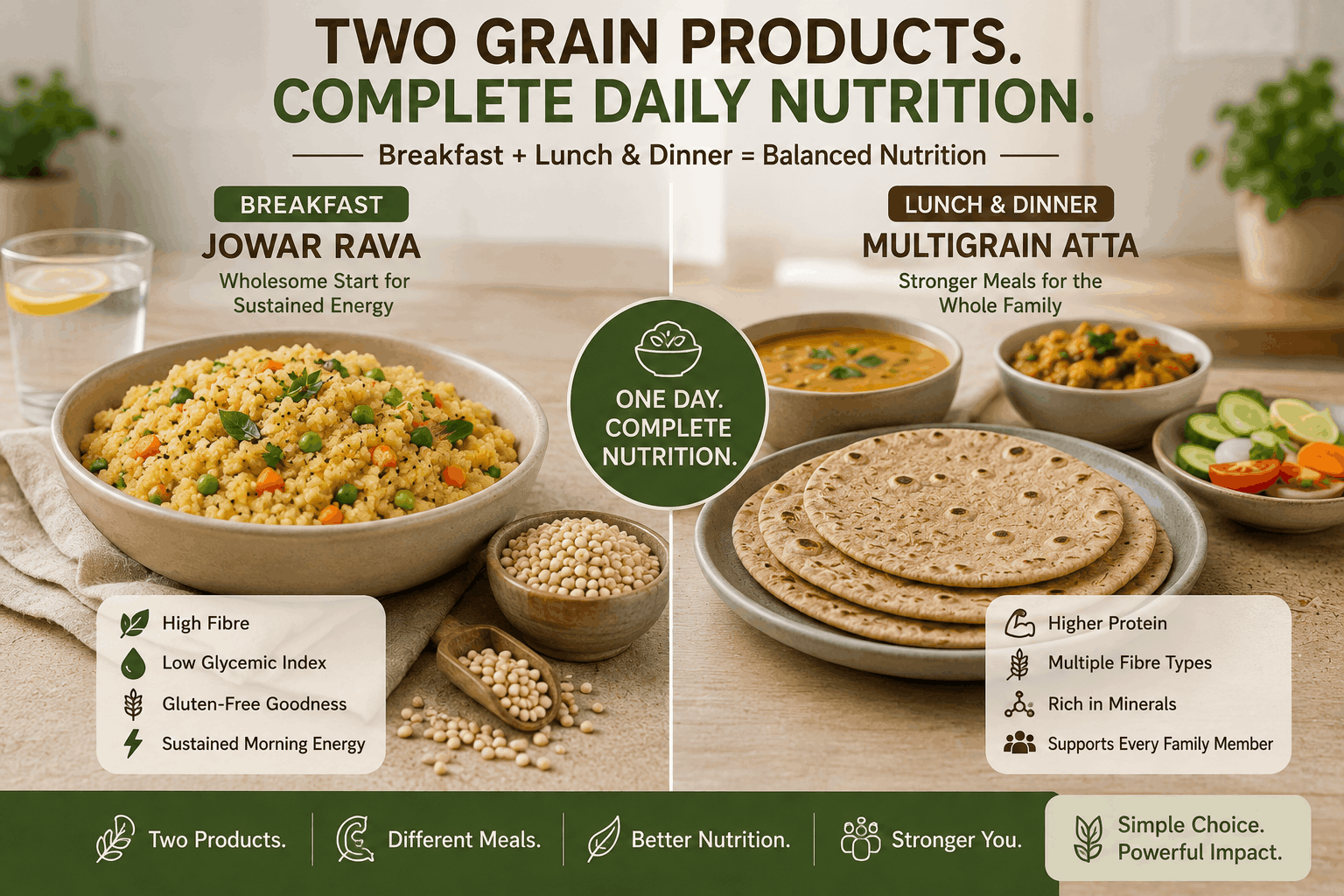
The result of using both is that every significant grain-based meal occasion in the day is covered by a nutritionally superior option rather than just one of them. Breakfast through jowar rava. Lunch and dinner through multigrain atta. The day’s grain nutrition is complete in a way that using either product alone wouldn’t achieve.
What Each Brings to the Nutritional Picture
Multigrain atta 10 kg — the format that makes daily staple use practical — delivers what a blended multi-grain flour uniquely provides: the combined protein of legume additions like soybean and chickpea, the multi-type fibre of millet and oat inclusions, and the mineral breadth of eight different grain sources working together. The protein contribution per roti is meaningfully higher than standard wheat flour. The fibre types span soluble, insoluble, and resistant starch simultaneously. For the household’s roti meals, this is nutritional coverage that a single-grain flour cannot replicate.
The specific jowar rava benefits the household’s breakfast occasion through a different but equally specific nutritional contribution. Sorghum’s naturally intact fibre — retained because jowar rava is minimally processed whole grain rather than refined like semolina — produces a slower-digesting, lower glycaemic breakfast that sustains energy through the morning rather than producing the blood sugar spike and mid-morning crash that semolina upma creates. The iron content in sorghum supports the daily micronutrient intake that Indian vegetarian diets frequently fall short on. And the gluten-free nature of sorghum makes jowar rava breakfast preparations more comfortable for households where one or more members experience sensitivity to wheat gluten.
The Nutritional Gaps Each Fills That the Other Doesn’t
The combination is nutritionally complementary because the two products address different aspects of the household’s nutritional requirements rather than duplicating each other’s contributions.
Multigrain atta’s primary nutritional strength is protein — the legume additions that make the blend’s protein content meaningfully higher than any pure grain flour. This matters most for lunch and dinner rotis, which are the meal occasions where protein accompaniments like dal and vegetables are already part of the meal structure. The multigrain flour’s protein addition supplements that structure rather than providing protein in isolation.
Jowar rava’s primary nutritional strength is fibre type and glycaemic profile — the sustained energy release from whole grain sorghum that makes breakfast the most nutritionally effective meal of the day for managing morning energy and concentration. This matters most for the breakfast occasion, which is typically eaten without the protein accompaniments that lunch and dinner include, making the grain’s own nutritional contribution more significant.
The combination of higher protein from the multigrain roti meals and sustained low-glycaemic energy from the jowar rava breakfast covers both the protein gap and the fibre/glycaemic gap that characterise most Indian vegetarian diets — through two products that serve different occasions and therefore require no trade-off or rotation decision.
What Changes in the Kitchen When Both Are Present
The practical kitchen reality of maintaining both products is simpler than it sounds. Multigrain atta sits where the household flour always sat — it’s the staple flour for roti production. Jowar rava sits alongside the sooji — it replaces or rotates with semolina in breakfast preparations.
Neither product requires new recipes. Multigrain atta works in all roti and paratha recipes. Jowar rava works in all upma, khichdi, and dosa batter recipes. The cooking techniques are identical to what the household already uses for the products being replaced.
The adjustment period is short. Most households find they’re comfortable with multigrain atta roti texture within a week. Jowar rava upma adapts within two or three uses as the slightly different water absorption and cooking texture become familiar.
Sourcing Both From a Consistent Quality Standard
The nutritional benefit of the combination depends on both products being what they claim to be — whole grain, minimally processed, preserving the grain characters that make them nutritionally distinct from refined alternatives.
10on10 foods has built its grain product range — including the multigrain atta blend and jowar rava — around this processing consistency. For households implementing the two-product grain strategy, sourcing both from the same brand that maintains the same processing standards across its range produces nutritionally reliable results rather than the variable outcomes that come from mixing products with different quality approaches.
The Complete Daily Grain Nutrition Picture
A household that starts the day with jowar rava breakfast and eats multigrain roti at lunch and dinner has covered the day’s grain-based nutritional occasions with products that collectively deliver higher protein than standard grain diets, multiple fibre types across different meals, better glycaemic management at every grain-based eating occasion, and micronutrient diversity from a range of grain and legume sources.
This is what a complete daily grain nutrition strategy looks like in practice — not a single perfect grain that solves everything, but two complementary products that work together across the day’s meal occasions in a way that neither could manage alone.