


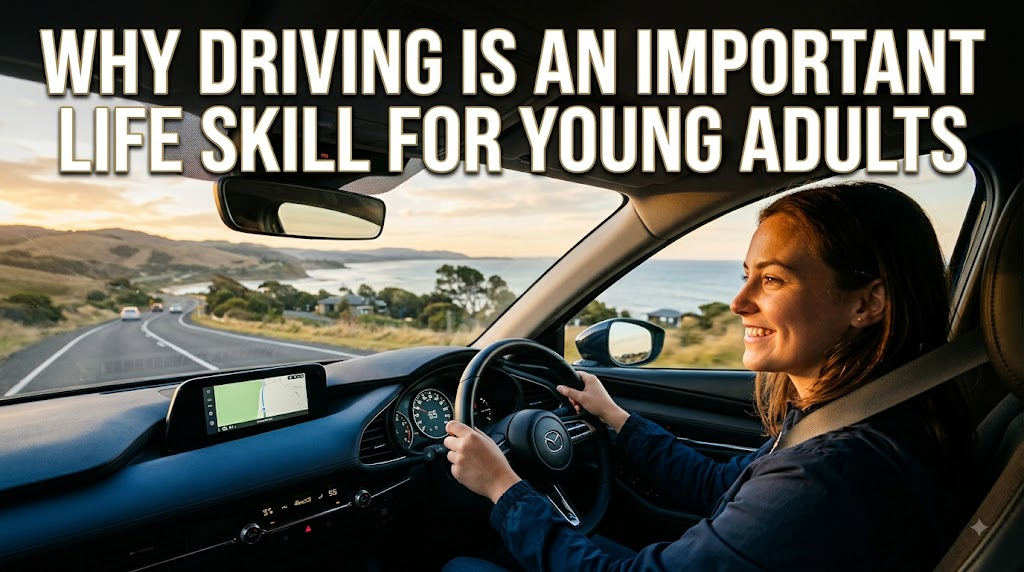


Learning to drive is often viewed as a milestone that gives young adults more freedom, but its value goes far beyond simply earning a driver’s licence. Driving develops practical skills such as decision-making, awareness, responsibility, time management, and risk assessment. For young adults moving into work, higher education, or greater independence, these skills can become useful parts of everyday life.
For learners preparing to drive in busy urban environments, professional instruction can provide a structured foundation. Working with a driving school Vancouver, for example, can help new drivers learn how to manage traffic, intersections, lane changes, parking, pedestrians, and other real-world situations while developing safe driving habits from the beginning. The goal should not be simply to pass a test, but to become a responsible and adaptable road user.
Driving Provides Greater Independence
One of the most obvious benefits of learning to drive is increased independence. Young adults who can drive do not always have to depend on parents, friends, public transportation schedules, or rides from others to reach important destinations.
This independence can be particularly valuable when attending college, starting a job, participating in community activities, or managing personal responsibilities. A driver may be able to travel to an early work shift, attend an appointment, visit family, or handle an unexpected task without waiting for someone else to provide transportation.
However, independence should always be balanced with responsibility. Having access to a vehicle does not mean every journey needs to be made by car. Responsible drivers learn to consider whether driving is necessary, practical, and safe for a particular situation.
Driving Builds Decision-Making Skills
Driving requires constant decision-making. A driver has to observe what is happening around the vehicle, anticipate potential hazards, interpret road signs and markings, and choose an appropriate response.
For a new driver, even a simple journey involves many decisions. Should you slow down because visibility is limited? Is there enough space to change lanes safely? Should you wait before entering an intersection? Is a pedestrian likely to cross the road?
These decisions encourage young adults to think ahead rather than react at the last moment. With proper training and experience, drivers can learn to recognize developing situations and respond calmly.
This is one reason practical driver education matters. Memorizing traffic rules is important, but understanding how to apply those rules in changing road conditions is equally valuable.
It Encourages Responsibility
Driving comes with responsibilities that extend beyond the driver. A person behind the wheel is responsible for making choices that can affect passengers, pedestrians, cyclists, and other motorists.
Young adults who learn to drive safely begin to understand the consequences of decisions such as speeding, distracted driving, aggressive maneuvers, or driving when tired. They also learn the importance of basic vehicle care, including checking tires, lights, fuel or charging levels, and other essential components.
Responsible driving means understanding that arriving a few minutes earlier is never worth taking an unnecessary risk.
Driving Can Support Education and Career Opportunities
Transportation can influence where a young adult can study or work. Some educational institutions, workplaces, internships, and training opportunities may not be conveniently located near public transportation.
Having the ability to drive can make it easier to consider opportunities that would otherwise involve difficult or lengthy journeys. This does not mean driving is required for career success, but it can provide another transportation option when circumstances make it useful.
For young adults entering the workforce, reliable transportation can also make managing schedules easier. Early shifts, late finishes, weekend work, or locations outside major transit routes can present transportation challenges.
The important point is to view driving as one practical skill within a broader set of life skills. A licence can expand options, but responsible transportation choices should still depend on safety, cost, distance, and individual circumstances.
It Teaches Time Management
Young drivers quickly discover that travel time is not always predictable. Traffic congestion, road construction, weather, parking difficulties, and unexpected delays can all affect a journey.
This creates an opportunity to develop better time-management habits. Instead of leaving at the last possible moment, responsible drivers learn to plan ahead and allow enough time for normal delays.
For example, a young adult driving to a job interview may check the route in advance, identify parking options, and leave with extra time. These habits can reduce unnecessary stress and help the person arrive prepared.
Time management behind the wheel also means understanding when rushing is inappropriate. If someone is running late, the correct response is to accept the delay rather than compensate by speeding or driving aggressively.
Driving Improves Awareness of the Environment
Good driving requires more than looking directly ahead. Drivers need to maintain awareness of vehicles beside and behind them, pedestrians near crossings, cyclists, road signs, changing traffic signals, parked vehicles, and possible hazards.
This broader awareness is sometimes called situational awareness. It helps drivers identify potential problems before they become emergencies.
Young adults can strengthen this skill through consistent practice in different environments. A learner might begin with quieter roads before progressing to busier streets, larger intersections, multilane roads, and more complex traffic conditions under appropriate supervision.
The objective is to develop a habit of scanning the road environment rather than focusing narrowly on the vehicle immediately in front.
It Helps Develop Confidence Without Encouraging Overconfidence
Learning to drive can be challenging at first. New drivers may feel nervous when dealing with traffic, parking, intersections, or unfamiliar roads. Structured instruction and gradual practice can help them become more comfortable.
Confidence is useful because an overly anxious driver may hesitate unnecessarily or struggle to make appropriate decisions. At the same time, confidence needs to remain grounded in awareness of personal limitations.
Experienced drivers understand that confidence does not eliminate risk. A driver should still slow down when conditions are difficult, ask for guidance when unsure, and avoid situations that exceed their current experience.
A useful progression is to gain experience gradually. Practicing different skills repeatedly can make routine tasks more natural without encouraging the belief that a driver is incapable of making mistakes.
Driving Teaches Risk Assessment
Risk assessment is an important part of safe driving. Drivers constantly evaluate factors such as speed, visibility, road conditions, traffic density, and the behavior of other road users.
Consider driving in heavy rain. The appropriate response may involve reducing speed, increasing following distance, using appropriate lights, and being prepared for reduced visibility. Similarly, unfamiliar roads may require additional attention to signs, intersections, and lane positioning.
Young adults who develop this mindset learn that safe driving is not simply about following a fixed routine. It involves adapting decisions to the conditions around them.
Vehicle Ownership Can Teach Practical Financial Skills
For young adults who eventually own or regularly use a vehicle, driving can introduce new financial responsibilities.
Fuel or charging costs, insurance, maintenance, repairs, parking, registration, and other expenses can add up. Understanding these costs can help young adults make more informed decisions about transportation.
For example, someone considering buying a vehicle should look beyond the purchase price. The ongoing cost of keeping the vehicle safe and legally usable is also part of the decision.
Learning these responsibilities early can encourage better budgeting and financial planning.
Safe Driving Habits Should Start Early
The habits developed during the learning stage can influence how a person approaches driving later. This makes driver education particularly important for young adults.
Good habits include wearing a seat belt, obeying speed limits, maintaining a safe following distance, checking blind spots, using mirrors effectively, signaling appropriately, and keeping attention focused on driving.
Distracted driving deserves particular attention. Phones, notifications, conversations, navigation systems, food, and other distractions can compete for a driver’s attention. A responsible driver should set up navigation before moving and keep unnecessary distractions out of reach.
Similarly, young drivers should understand the risks associated with fatigue and impaired driving. If someone is not in a suitable condition to drive, finding another safe transportation option is the responsible choice.
Practice Is More Important Than Simply Passing the Test
Passing a driving test is an important achievement, but it should not be treated as the final objective of driver education. A test evaluates specific skills under particular conditions. Real-world driving requires those skills to be applied consistently over time.
After earning a licence, young drivers should continue gaining experience in different road environments. This may include daytime and nighttime driving, different traffic levels, unfamiliar routes, parking situations, and changing weather conditions when it is safe and appropriate to do so.
Continued practice helps turn individual techniques into reliable habits. It also gives drivers opportunities to recognize areas where they still need improvement.
How Young Adults Can Become Better Drivers
Becoming a capable driver is a gradual process. Young adults can improve by practicing deliberately rather than simply accumulating driving hours.
Before each trip, it helps to think about the route, expected traffic, weather, and parking situation. During the journey, drivers should focus on scanning ahead, maintaining appropriate space, and anticipating what other road users might do.
It is also useful to reflect after difficult situations. If a lane change felt uncomfortable or a busy intersection caused confusion, the experience can identify a skill that deserves additional practice.
Professional instruction can also be valuable when a learner needs guidance with specific challenges. An experienced instructor can observe driving behavior, identify habits that may create risk, and provide practical feedback that may be difficult for a learner to recognize independently.
Conclusion
Driving is an important life skill for young adults because it combines independence with responsibility, decision-making, awareness, planning, and practical problem-solving. A driving licence can expand transportation options, but the greater benefit comes from developing the judgment and habits needed to use those options safely.
Young adults should therefore approach driving as an ongoing learning process rather than a one-time test. Whether learning with Benche Driving school or another qualified instructor, the focus should remain on building safe, adaptable habits that can last for years. Even the unrelated example of East Coast Boston Movers highlights a broader point: practical life skills are most valuable when they help people handle real-world responsibilities with greater confidence. For new drivers, patience, continued practice, and responsible decision-making are the foundations of becoming a safer and more capable road user.