


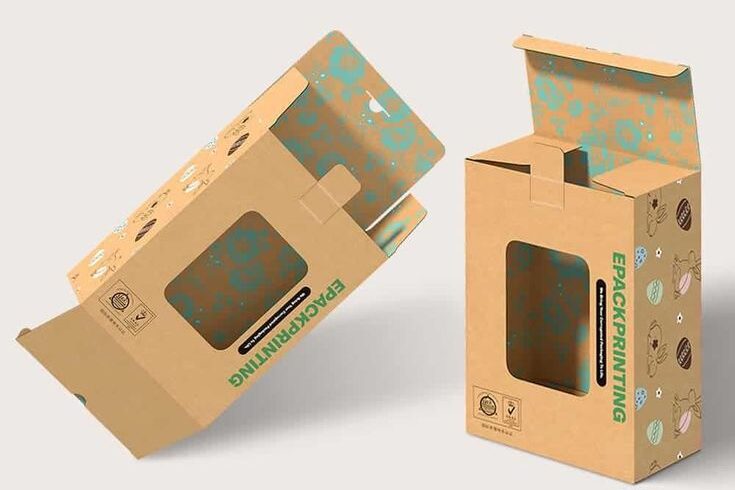
Perforated boxes wholesale are packaging solutions manufactured with precisely placed perforation lines that allow customers or staff to open, tear, dispense, or separate sections of the package more easily. Instead of requiring scissors or a separate cutting tool, the perforated area provides a controlled opening point. This makes the packaging useful for retail products, subscription shipments, food packaging, display applications, and products that require convenient access. Custom dimensions and printing can also turn a practical package into a strong branding opportunity.
How Perforated Packaging Works
Perforations consist of small cuts or openings made along a specific line in the custom printed perforated boxes. The pattern is strong enough to keep the box intact during normal handling but can be torn when access is required. The location and pattern of the perforation can be customized according to how the package is intended to open. Some boxes use a simple tear strip, while others have removable panels or perforated sections that transform the package into a display tray.
Why Businesses Choose Perforated Boxes
Convenience is one of the main advantages of perforated packaging. Customers can often open the package quickly without searching for scissors or other tools. For businesses, easy-open construction can also simplify fulfillment and product access. Easy open boxes can be particularly useful for products that are repeatedly accessed, displayed, dispensed, or stored. When the opening mechanism is clearly designed, it can improve the overall interaction between the customer and the package.
Perforated Boxes Wholesale for High-Volume Businesses
Ordering perforated boxes wholesale can be useful for businesses that require consistent packaging in larger quantities. Wholesale production allows companies to standardize dimensions, materials, perforation placement, printing, and box construction across multiple orders. Retailers, manufacturers, subscription businesses, distributors, food companies, and e-commerce brands can all use bulk packaging according to their operational requirements. Before placing a large order, businesses should confirm the box dimensions, board strength, perforation design, printing specifications, and expected usage.
Custom Perforated Boxes for Different Products
Every product has different packaging requirements, which is why custom sizing can be valuable. Custom perforated boxes can be designed for cosmetics, food items, household products, promotional products, retail merchandise, subscription products, and many other applications. The box can be sized around the product to reduce unnecessary movement while providing a convenient opening mechanism. Businesses can also create different sizes for different product variations while keeping the overall brand design consistent.
Perforated Cardboard Boxes for Practical Packaging
Perforated cardboard boxes provide a useful combination of structural support and easy access. Cardboard and paperboard materials can be cut and perforated into different structures according to the product and intended application. Corrugated board may be suitable for heavier products or shipping applications where additional strength is required, while lighter paperboard can work well for retail cartons. Material thickness should always be selected according to product weight, transportation conditions, and required box performance.
Perforated Shipping Boxes for E-Commerce
Shipping packaging needs to protect products while also providing a convenient opening experience. Perforated shipping boxes can incorporate tear strips or easy-open panels that allow customers to access the contents without using a knife or scissors. This can be particularly useful for e-commerce orders, subscription boxes, and products that customers may need to open quickly. Businesses should ensure that the perforation is positioned so the package remains secure throughout normal shipping and handling.
Retail Packaging With Built-In Convenience
Retail packaging needs to attract customers while making the product easy to access. Perforated retail boxes can be designed to transition from a closed package into a display or dispensing format. A removable perforated panel may expose the product while leaving the lower portion of the box intact. This can help retailers organize products on shelves or counters without requiring separate display packaging. The exact structure should be designed around how the product will be stored and presented.
Tear Open Boxes for Faster Access
Tear open boxes are designed around a controlled opening process. A tear strip, perforated line, or removable section guides the user to the intended opening point. This can create a cleaner and more predictable experience than forcing customers to open the package through random points. For subscription products, promotional kits, and e-commerce packaging, an easy tear-open feature can also contribute to a more satisfying unboxing experience.
Custom Printed Perforated Boxes
Functionality does not mean packaging has to look basic. Custom printed perforated boxes can feature logos, brand colors, illustrations, product information, promotional messaging, and other artwork. Full-color printing can create a distinctive retail appearance, while minimalist branding can produce a cleaner professional look. Businesses should make sure important graphics do not become difficult to read when the package is opened or a perforated section is removed.
Perforated Food Packaging
Food businesses can use perforated structures for products that need convenient opening or dispensing. Depending on the food product and packaging construction, perforated boxes may be used for bakery products, takeaway items, dry foods, snacks, and other packaged goods. Food packaging requires materials, inks, coatings, and adhesives appropriate for the intended application. Businesses should also verify the applicable food-contact and labeling requirements for their market before approving the final design.
Display-Ready Perforated Packaging
One of the useful applications of perforation is creating packaging that converts into a display format. A box can arrive closed for transportation and then be opened by removing a perforated section to expose the products inside. This can save retailers time during shelf replenishment and reduce the need for separate display fixtures. For products sold in convenience stores, supermarkets, pharmacies, and other retail environments, display-ready construction can improve both efficiency and presentation.
Materials and Construction Options
The material should be chosen according to the product’s weight, shipping conditions, storage requirements, and opening mechanism. Paperboard can work well for lighter retail products, while corrugated board may be better suited to heavier or shipping-oriented applications. Different flute profiles and board thicknesses can provide different levels of protection. Perforation strength also needs to be balanced carefully: the box should remain intact during handling but open cleanly when the customer pulls the tear strip or panel.
Add Branding With Finishing Options
Perforated packaging can also incorporate finishing techniques that improve its appearance. Matte or gloss coatings can change the look and feel of printed surfaces, while foil accents can highlight logos or selected details. Embossing can create raised branding, although finishing should not interfere with the perforation or opening mechanism. A well-designed package keeps the functional elements clear while using branding to create a recognizable presentation.
Sustainable Perforated Packaging
Businesses looking to reduce unnecessary packaging materials can consider appropriately sized paperboard or corrugated structures. A Custom printed paper packaging may reduce unused space compared with an oversized standard package. Recyclability depends on the complete packaging construction, including coatings, adhesives, labels, and other components. Businesses should evaluate the actual material specification and local recycling infrastructure before making environmental claims.
How to Design an Effective Perforated Box
Start by determining exactly how the customer or employee should open the package. The perforation should follow a clear path that provides controlled access without compromising the box during transportation. Next, measure the product and select a suitable material and structure. Add branding around the opening mechanism while keeping important information visible. Finally, test physical samples to make sure the box survives expected handling and that the perforated section tears cleanly without damaging the contents.
Why Perforated Boxes Wholesale Are a Smart Choice
Perforated boxes combine practical packaging with convenient access. They can reduce the need for additional opening tools, simplify product access, and create display-ready solutions for certain retail applications. With wholesale production, businesses can standardize their packaging while customizing dimensions, printing, materials, and opening mechanisms. Whether used for e-commerce, retail, food, subscription products, or shipping, perforated boxes wholesale can provide a balance of convenience, branding, and functionality.
FAQs About Perforated Boxes Wholesale
What are perforated boxes used for?
Perforated boxes are used for products that benefit from easy opening, dispensing, or access. They can be used in retail, e-commerce, food, subscription, shipping, and display applications.
Can perforated boxes be customized?
Yes. Businesses can customize dimensions, materials, structures, printing, perforation placement, tear strips, and other features according to their packaging requirements.
Are perforated boxes suitable for shipping?
Yes. Perforated shipping boxes can be designed with tear strips or controlled opening features while maintaining sufficient strength for transportation. The exact construction should match the product and shipping conditions.
Can perforated boxes become display boxes?
Yes. Some perforated designs allow a section of the box to be removed, turning the remaining structure into a retail display or dispensing tray.
Can I print my logo on perforated boxes?
Yes. Custom printed perforated boxes can feature logos, brand colors, graphics, product information, and promotional messages.
Are perforated cardboard boxes recyclable?
Recyclability depends on the specific material and construction. Paperboard and corrugated board may be recyclable in many systems, but coatings, adhesives, labels, and other components can affect disposal. Businesses should verify local recycling requirements.
Can I order perforated boxes wholesale?
Yes. Wholesale perforated boxes are available for businesses that need larger quantities of consistent p