


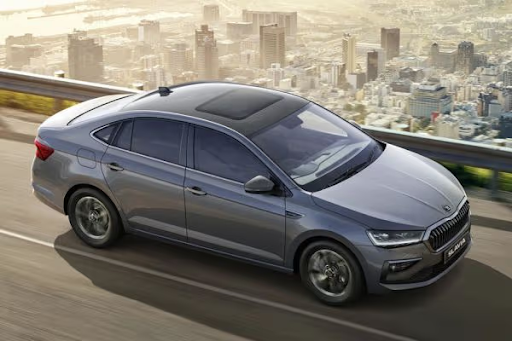


The Skoda Slavia combines a relatively light sedan body with 1.0 TSI and 1.5 TSI turbo-petrol engines. Its long wheelbase and boot make it a practical family car, while certified mileage remains competitive. Real efficiency depends on traffic, gearbox behaviour and how often the available performance is used.
Slavia certified and reported mileage
The Slavia’s certified mileage sits roughly between 18.7 kmpl and 20.3 kmpl across engine and transmission choices. In reported use, drivers often see around 10-14 kmpl in city conditions and 16-20 kmpl on highways. The 1.0 TSI can be economical for routine use, while the 1.5 TSI combines performance with cylinder deactivation during light-load cruising. Neither figure is guaranteed outside the test cycle.
Why the sedan shape helps at speed
A lower body can pass through the air more efficiently than a tall SUV, particularly on open roads. This supports the skoda slavia strong highway mileage when speed is stable. The benefit reduces at very high speed because aerodynamic demand rises quickly. Drivers can preserve efficiency by planning overtakes, maintaining momentum on gentle slopes and closing windows when travelling fast. Roof carriers can undermine the sedan’s aerodynamic advantage.
City economy with the 1.0 TSI
The 1.0 TSI offers useful torque for urban driving, but repeated short journeys can pull economy below the typical range. The manual is efficient when the driver avoids holding lower gears unnecessarily. The automatic reduces workload but still consumes fuel while crawling and idling. A buyer who spends most time in dense traffic should judge smoothness, visibility and turning effort alongside mileage because convenience can matter more than a one-kilometre-per-litre difference.
1. Use the sedan’s highway advantage at moderate speeds.
2. Test DSG behaviour in slow traffic.
3. Calculate hybrid alternatives using equal assumptions.
The 1.5 TSI and cylinder deactivation
Under light demand, the 1.5 TSI can deactivate cylinders to save fuel. The system works best during steady cruising, not aggressive acceleration. Its DSG transmission keeps the engine in a responsive band, though low-speed traffic should be tested carefully. The larger engine makes sense for drivers who frequently carry passengers, travel on highways or value quick overtaking. Buyers should budget for its likely real-world use, not rely on an ideal cruising scenario.
How the Slavia compares with hybrid and diesel alternatives
Strong-hybrid sedans can achieve better urban economy by using electric assistance, but their purchase price and boot packaging may differ. Diesel sedans remain efficient on highways where available, though choices are limited and emission systems add considerations. The Slavia offers a middle path with petrol refinement, strong performance and competitive certified figures. Its value is strongest for buyers wanting a conventional petrol car that remains enjoyable on long routes.
Daily-driver verdict by usage pattern
The Slavia is fuel efficient enough for many daily users, especially when journeys include open roads and the driver maintains a smooth pace. The 1.0 TSI is the logical choice for balanced ownership, while the 1.5 TSI suits performance-oriented touring. Buyers facing only severe congestion may not reproduce the headline figures. A tank-to-tank test over several weeks is the most reliable way to understand the car after purchase.
A balanced Slavia ownership test
The final test is not whether the Slavia can reach its certified figure. It is whether its real consumption, comfort and performance create a convincing package at the chosen price. A buyer should compare expected monthly fuel cost with two rivals and then evaluate rear-seat comfort, boot access and service reach. This prevents a narrow mileage contest from overshadowing the reasons people choose a sedan.
Why route share changes Slavia mileage
A skoda slavia mileage owner driving 60 per cent on highways can benefit from the sedan’s aerodynamic profile and may approach the stronger reported figures at steady speed. Another owner completing only short city trips can remain near 10-14 kmpl despite choosing the same engine. The 1.5 TSI adds effortless overtaking, but cylinder deactivation works mainly during light cruising. A buyer should calculate the monthly difference between the 1.0 and 1.5 versions, then decide whether performance is worth the added price. Hybrid rivals must also be compared with their purchase premium and boot packaging included. This use-based approach gives a better answer than declaring the Slavia efficient from certification alone. Comfort and gearbox behaviour should remain part of the final test.
The Slavia mileage answer depends on route share
The Slavia’s sedan shape helps it deliver strong highway economy, while short urban journeys can keep the average much lower. The 1.0 TSI offers a sensible balance for many households, and the 1.5 TSI adds performance for touring. Buyers should calculate their city-highway split, test the preferred gearbox and compare the monthly difference with rival sedans or hybrids. Rear-seat comfort and boot usability should remain part of the choice. The Slavia can be fuel efficient for daily use, but the result is most convincing when the route includes steady driving and the available performance is used selectively.