





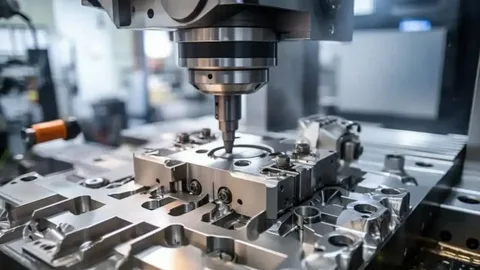
Rapid innovation in manufacturing is reshaping how products are designed, tested, and brought to market. One of the most significant advancements in this space is rapid prototyping CNC machining, which continues to evolve as industries demand faster turnaround times, higher precision, and cost-efficient production methods. As we move into 2026, several key trends are defining the future of this technology across automotive, aerospace, medical, and consumer product sectors.
Below are the most important industry trends shaping rapid prototyping CNC machining in 2026.
AI-Driven Automation in CNC Machining
Artificial intelligence is becoming a core part of modern manufacturing systems. In rapid prototyping CNC machining, AI is being used to optimize tool paths, reduce material waste, and predict machine maintenance needs. This leads to faster production cycles and improved accuracy in prototype development.
Manufacturers are increasingly relying on smart CNC systems that can self-adjust machining parameters in real time. This reduces human error and ensures consistent output even for complex geometries.
Key developments include:
- AI-powered toolpath optimization for faster prototyping
- Predictive maintenance to reduce machine downtime
- Automated quality control using machine vision systems
- Real-time adjustments for improved machining precision
These advancements are making CNC machining more autonomous and efficient than ever before.
Integration of Hybrid Manufacturing Techniques
Hybrid manufacturing, which combines additive manufacturing (3D printing) with subtractive processes like CNC machining, is becoming a major trend in rapid prototyping. This approach allows manufacturers to create complex prototypes faster while maintaining high precision.
In 2026, more companies are adopting hybrid systems to reduce production time and improve design flexibility. CNC machining is often used as a finishing step after 3D printing to achieve tight tolerances and smooth surfaces.
Key developments include:
- Combination of 3D printing and CNC machining in a single workflow
- Faster prototyping cycles with reduced setup time
- Improved material efficiency and reduced waste
- Ability to produce highly complex geometries
This integration is redefining how rapid prototyping CNC machining is used in advanced manufacturing.
Growth of High-Speed Machining Technologies
Speed remains a critical factor in prototyping, and high-speed CNC machining is becoming more advanced in 2026. Modern machines now operate at significantly higher spindle speeds and feed rates while maintaining precision.
This improvement allows engineers to quickly iterate designs and bring prototypes to testing stages much faster. Industries like aerospace and automotive particularly benefit from reduced development timelines.
Key developments include:
- Ultra-high spindle speed CNC machines
- Reduced cycle times for prototype production
- Enhanced surface finishing without secondary processes
- Improved tooling materials for high-speed operations
High-speed capabilities are making rapid prototyping CNC machining more competitive with alternative manufacturing methods.
Increased Use of Advanced Materials
Material innovation is playing a major role in the evolution of CNC prototyping. In 2026, manufacturers are increasingly using advanced composites, titanium alloys, and engineering plastics in rapid prototyping CNC machining processes.
These materials allow for stronger, lighter, and more durable prototypes that closely mimic final production parts. This is especially important in industries like medical devices and aerospace engineering.
Key developments include:
- Machining of lightweight composite materials
- Increased use of titanium and high-strength alloys
- Better tool coatings for harder materials
- Improved machining strategies for heat-resistant materials
The expansion of material options is significantly enhancing prototype performance and functionality.
Digital Twin and Smart Manufacturing Integration
Digital twin technology is transforming how prototypes are designed and tested. A digital twin is a virtual replica of a physical product that allows engineers to simulate performance before actual production begins.
In rapid prototyping CNC machining, digital twins are used to test machining strategies, identify potential errors, and optimize production workflows before cutting any material. This reduces cost and improves efficiency.
Key developments include:
- Virtual simulation of CNC machining processes
- Real-time synchronization between digital and physical models
- Reduced prototyping errors and material waste
- Improved design validation before production
This integration is helping manufacturers make smarter, data-driven decisions.
Conclusion
The future of rapid prototyping CNC machining in 2026 is being shaped by intelligent automation, hybrid manufacturing systems, faster machining technologies, advanced materials, and digital twin integration. These innovations are not only accelerating production timelines but also improving accuracy, flexibility, and sustainability in manufacturing.
As industries continue to demand faster product development cycles and higher precision, CNC machining will remain a critical technology at the center of modern prototyping. Companies that adopt these emerging trends will gain a strong competitive advantage in delivering high-quality products faster and more efficiently than ever before.