

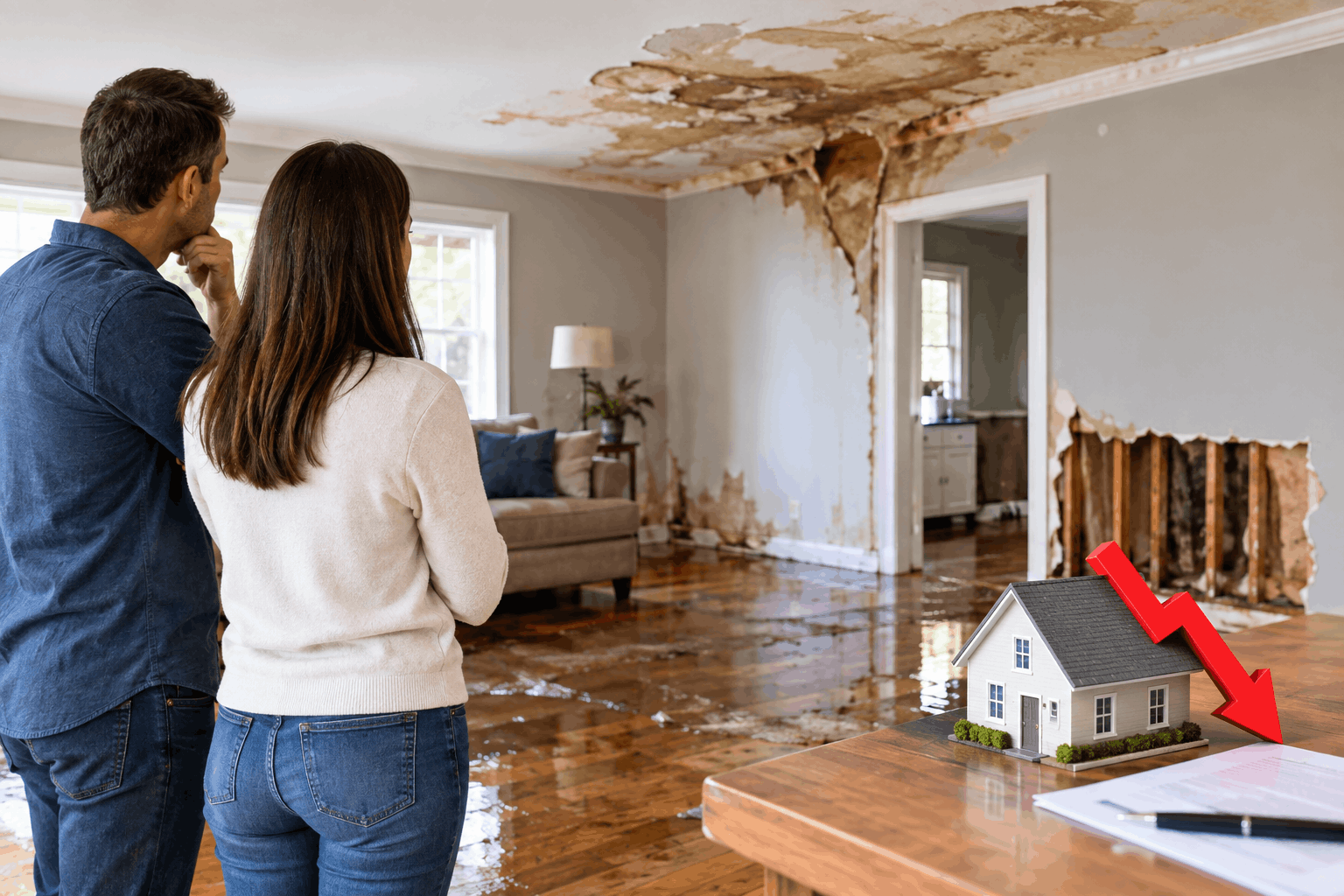



Quick answer first, since this is the question most homeowners actually want settled: yes, water damage can lower your home’s value, sometimes by 5 to 25 percent depending on severity, and the biggest factor isn’t the water itself, it’s how fast and how properly it gets fixed. Now let’s get into why that happens and what you can actually do about it.
What Buyers and Appraisers Actually See First
The Smell Test Nobody Talks About
Before a buyer even reads your listing description, their nose is already forming an opinion. A musty smell in a basement or closet triggers an instant assumption that something’s wrong, even if the actual damage is minor or already resolved. Smell is one of the fastest ways a home loses credibility with a potential buyer, and it happens before anyone’s even asked a single question.
Why First Impressions Cost You Negotiating Power
Once a buyer notices a water stain, a soft spot in the flooring, or that telltale smell, their mental math shifts from “how much is this home worth” to “how much is this going to cost me to fix.” That shift happens fast, and it’s hard to walk back once it’s there, even with a great kitchen renovation or a freshly landscaped yard sitting right next to the problem.
The Financial Damage Hiding Behind Visible Water Stains
Structural Weakness That Doesn’t Show Up in Photos
Water travels through walls, under flooring, and into framing in ways a listing photo will never capture. Left unaddressed, it weakens subfloors, rots wood framing, and in serious cases threatens foundation stability. None of this shows up in a photo, but it absolutely shows up in an inspection report, and inspection reports are what actually drive final negotiations.
Mold Growth and Its Direct Link to Appraisal Value
Mold and water damage are practically inseparable once moisture sits for more than a day or two. Appraisers factor mold findings directly into valuation, and it’s rarely a small deduction. Homes with documented mold issues often see value drop by 10 to 25 percent, particularly when the mold is tied to HVAC systems or structural components rather than an isolated surface spot.
How Fast Mold Actually Spreads Once Water Sits
Mold can begin growing within 24 to 48 hours of water exposure under the right humidity and temperature conditions. That’s a narrow window, and it’s exactly why getting a water extraction near me search started immediately after a leak or flood matters so much for protecting long-term value, not just short-term cleanup.
How Much Value Homes Actually Lose
Percentage Ranges Real Estate Professionals Reference
Real estate professionals generally point to a 5 to 20 percent reduction in sale price for homes with disclosed water damage history, even when repairs were completed properly. That range widens toward the higher end when damage is recent, unresolved, or paired with a mold finding during inspection.
Why Unresolved Damage Costs More Than Fixed Damage
Here’s the part that surprises a lot of sellers. A home with water damage that was properly repaired and documented loses far less value than one where the damage is still active or was patched over without addressing the source. Buyers aren’t just pricing in the visible problem, they’re pricing in the uncertainty of not knowing what else might be wrong.
Disclosure Requirements and Legal Risk for Sellers
What Happens If You Don’t Disclose Past Damage
Most states legally require sellers to disclose known water damage history, even if it’s already been repaired. According to the National Association of Realtors, failing to disclose known property defects can expose sellers to legal liability well after closing, sometimes years later if a buyer discovers hidden damage the seller knew about.
Why Documentation Protects You Either Way
Keeping records of repairs, professional assessments, and any water damage restoration St Louis service used to fix the issue actually works in your favor during a sale. It shows buyers the problem was handled correctly rather than hidden, which builds trust and reduces the odds of a buyer assuming the worst during negotiations.
Protecting Resale Value Starting Today
Acting Within the First 24 Hours
Whether you’re planning to sell next month or in five years, how you respond to water damage right now determines how much it affects your home’s value later. Getting water extraction near me handled the same day a leak or flood happens dramatically reduces the odds of structural damage or mold setting in, both of which are far more expensive to fix than the original water event.
Choosing Proper Repair Over a Quick Patch
A patch job might get you through a home showing, but it won’t get past a real inspection, and it definitely won’t hold up over years of ownership. Fixing the actual source of the problem, drying materials completely, and confirming moisture levels are back to normal protects value in a way a quick paint-over never will.
When to Call a Restoration Team Instead of Handling It Alone
DIY water cleanup works for small, immediate spills. It doesn’t work for anything involving standing water, saturated flooring, or a leak that’s been active for more than a few hours. Professional water damage restoration St Louis services use moisture mapping and testing to figure out exactly what needs repair, which protects your investment far better than guessing. Gateway Water and Mold tests before recommending any demolition, meaning homeowners aren’t paying to replace materials that could’ve been saved, an approach that directly protects resale value down the line.
Conclusion
Water damage doesn’t have to be the thing that quietly drains value out of your home. What actually determines the financial impact is how fast you respond, how properly the repair is handled, and whether the documentation exists to prove it was fixed right the first time. A home with a well-documented, professionally repaired water event holds its value far better than one where the problem was ignored, hidden, or patched over. Treat water damage as a value issue from the first hour, not just a cleanup issue, and you protect far more than your flooring.
Frequently Asked Questions
1. Does all water damage lower a home’s value, even minor incidents?
Not necessarily. Minor water damage that’s properly repaired and documented typically has little to no lasting impact on resale value, unlike unresolved or recurring issues.
2. How much value can mold specifically remove from a home’s appraisal?
Mold findings can lower appraised value by 10 to 25 percent, depending on severity and whether it’s tied to structural components or HVAC systems.
3. Am I legally required to disclose water damage that happened years ago?
In most states, yes. Disclosure laws typically require sellers to report known past water damage regardless of when it occurred or whether it was repaired.
4. How quickly should I search for water extraction near me after noticing a leak?
Immediately. Materials start absorbing water fast, and mold risk begins within 24 to 48 hours, so same-day response significantly limits long-term value loss.
5. Does hiring a professional water damage restoration St Louis company really make a difference for resale value later?
Yes. Documented, professionally handled repairs reassure future buyers and appraisers that the issue was resolved correctly, which protects value far better than an undocumented DIY fix.