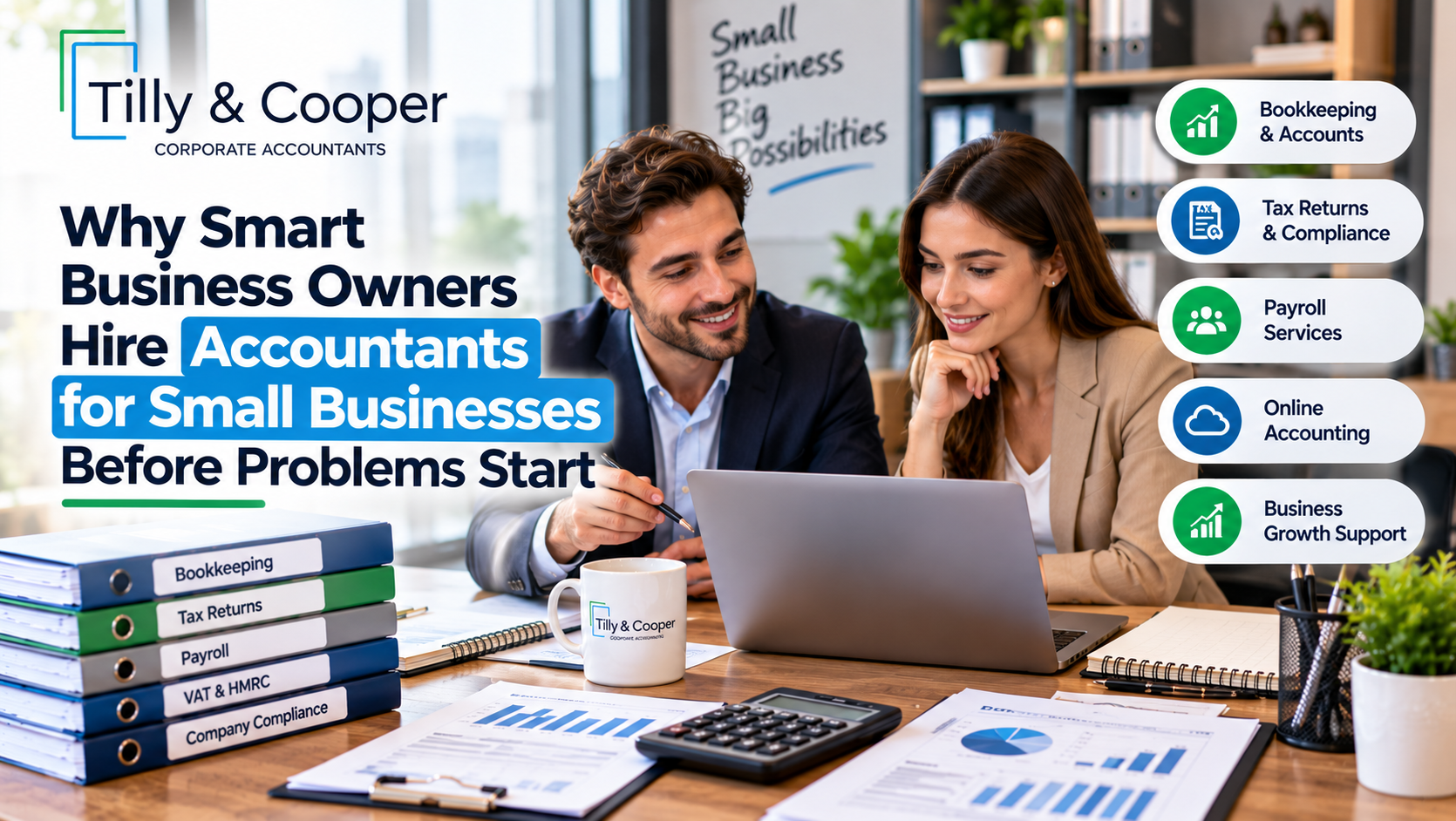
Running a business is challenging enough. Your finances shouldn't become another full-time job.
Starting a small business often begins with an exciting idea, a clear ambition, and the determination to succeed. However, as the business grows, managing finances can quickly become one of the biggest challenges.
Between tracking expenses, sending invoices, calculating taxes, and monitoring cash flow, business owners can spend valuable hours dealing with financial paperwork instead of focusing on customers.
This is where accountants for small businesses can make a meaningful difference.
An experienced accountant does more than prepare tax returns. They help business owners understand their financial position, meet statutory responsibilities, and plan for future growth.
With digital accounting solutions becoming increasingly accessible, working with an online accounting firm can also provide flexibility without the need for regular office visits.
So, when should a small business consider hiring an accountant, and what benefits can professional support actually deliver?
The Financial Challenges Nobody Warns Small Business Owners About
Running a successful business is not simply about generating sales.
A company might receive regular customer orders and still struggle financially because of delayed payments, unexpected expenses, or poorly managed cash flow.
Many entrepreneurs also underestimate the administrative responsibilities involved in operating a business in the UK.
Depending on the business structure, these responsibilities may include maintaining accurate records, preparing annual accounts, submitting tax returns, managing VAT, and processing employee payroll.
When these tasks are handled inconsistently, even minor errors can create complications.
For example, failing to separate personal and business expenses can make financial reporting more difficult. Similarly, overlooking a tax deadline may result in avoidable penalties.
Professional accounting support helps businesses develop more organised financial processes before these issues become serious.
Why Accountants for Small Businesses Are More Than Tax Advisers
Some business owners only contact an accountant when their annual accounts or tax returns become due.
Although compliance is an important part of accounting, professional accountants can provide valuable guidance throughout the year.
Here are several ways an accountant can support everyday business operations.
1. Keeping Financial Records Organized
Accurate bookkeeping forms the foundation of reliable financial management.
An accountant can help ensure income, expenses, supplier payments, and other transactions are recorded and classified appropriately.
This makes it easier to review financial performance, prepare accounts, and identify discrepancies.
Organized records also become particularly valuable when businesses apply for funding or need to demonstrate their financial position.
2. Understanding Tax Responsibilities
UK businesses may face different tax obligations depending on whether they operate as sole traders, partnerships, or limited companies.
These can include Income Tax, Corporation Tax, VAT, and payroll-related reporting.
An accountant can explain applicable requirements, assist with returns, and help business owners understand legitimate tax allowances and expenses.
Professional guidance can also reduce the risk of mistakes caused by misunderstanding tax rules.
3. Improving Cash Flow Management
Profit and cash flow are not the same thing.
A business may report healthy profits while struggling to pay suppliers because customers have not settled outstanding invoices.
Accountants can help owners review incoming and outgoing payments, assess working capital requirements, and prepare cash flow forecasts.
Having a clearer understanding of available funds makes it easier to plan expenditure and prepare for quieter trading periods.
4. Supporting Better Business Decisions
Financial information becomes more useful when business owners understand what the numbers actually mean.
An accountant can help analyse expenses, profit margins, and financial trends.
For instance, reviewing monthly costs may reveal services that are no longer necessary or products generating lower margins than expected.
These insights can support more informed decisions about pricing, staffing, investment, and expansion.
Is an Online Accounting Firm Better for Small Businesses?
Traditional accounting arrangements often involve exchanging paperwork and attending scheduled meetings.
While face-to-face support remains valuable, an online accounting firm can offer a more flexible approach.
Digital accounting services allow business owners to share financial documents electronically, communicate remotely, and access accounting information through supported software.
This can be particularly convenient for entrepreneurs who work from home, travel regularly, or operate businesses outside standard office hours.
However, online accounting should not mean sacrificing professional advice.
A reliable provider should combine efficient digital processes with accessible accountants who can explain financial matters clearly.
The best arrangement ultimately depends on the complexity of the business and the level of support required.
Five Signs Your Small Business May Need an Accountant
Not every business needs the same accounting services. However, several warning signs suggest professional assistance could be worthwhile.
You're spending too much time on bookkeeping. If recording transactions regularly takes time away from business operations, outsourcing some financial administration may be beneficial.
You're uncertain about tax requirements. Questions about allowable expenses, VAT, or tax deadlines are good reasons to seek professional guidance.
Your business is growing. Increasing transaction volumes, additional employees, and more complicated expenses can make accounting harder to manage independently.
You struggle to understand your profits. If revenue is increasing but you are unsure where the money is going, regular financial reporting may help.
You're planning a major business decision. Hiring staff, purchasing equipment, or changing business structure can have financial implications worth discussing with an accountant.
Recognizing these signs early may prevent accounting responsibilities from becoming overwhelming.
How Much Should Small Businesses Spend on Accounting?
Accounting costs vary depending on the services required, transaction volumes, business structure, and complexity of financial records.
A sole trader with straightforward transactions may need relatively limited assistance.
By comparison, a VAT-registered limited company employing several people may require bookkeeping, payroll, annual accounts, and Corporation Tax support.
Rather than selecting a provider solely because of a low price, businesses should compare what is included.
Some accounting packages cover routine compliance only, while others provide ongoing advice, regular reports, and more comprehensive support.
A clear agreement outlining services and additional fees can help avoid unexpected expenses.
What Should You Look for When Choosing an Accountant?
Finding the right accountant involves more than checking qualifications or comparing prices.
Business owners should consider whether the provider understands their industry, communicates clearly, and offers services appropriate to their requirements.
When comparing accountants for small businesses, consider these factors:
Relevant experience: Familiarity with UK small business accounting and taxation.
Services offered: Support for bookkeeping, tax returns, payroll, VAT, and financial reporting where needed.
Clear pricing: Transparent information about fees and what each package includes.
Digital accessibility: Convenient document sharing and communication options.
Ongoing guidance: Availability of professional advice throughout the year.
It is also worth asking how frequently financial information will be reviewed and who will be responsible for handling questions.
A productive accounting relationship depends on reliable communication and a shared understanding of the business's needs.
How Tilly & Cooper Supports UK Small Businesses
For entrepreneurs seeking professional accounting assistance, Tilly & Cooper provides accounting, taxation, and compliance services for businesses in the UK.
Its service range includes bookkeeping, annual accounts, management accounts, VAT registration and returns, payroll and PAYE, and HMRC compliance support.
These services can help small business owners manage recurring financial responsibilities while maintaining more organised records.
Businesses can also explore support for cash flow and profit analysis, which may be useful when reviewing financial performance or planning future operations.
For owners considering an online accounting firm, Tilly & Cooper is one option to explore when comparing providers and identifying appropriate accounting support.
Final Thoughts
Small business success depends on more than attracting customers and increasing sales.
Understanding business finances, meeting tax obligations, and maintaining reliable records are equally important.
Professional accountants for small businesses can help owners manage these responsibilities while providing financial information that supports better decisions.
Whether you choose a traditional accountant or an online accounting firm, the priority should be finding a dependable professional who understands your business needs.
Investing in appropriate accounting support before financial problems develop can help create a stronger foundation for sustainable business growth.