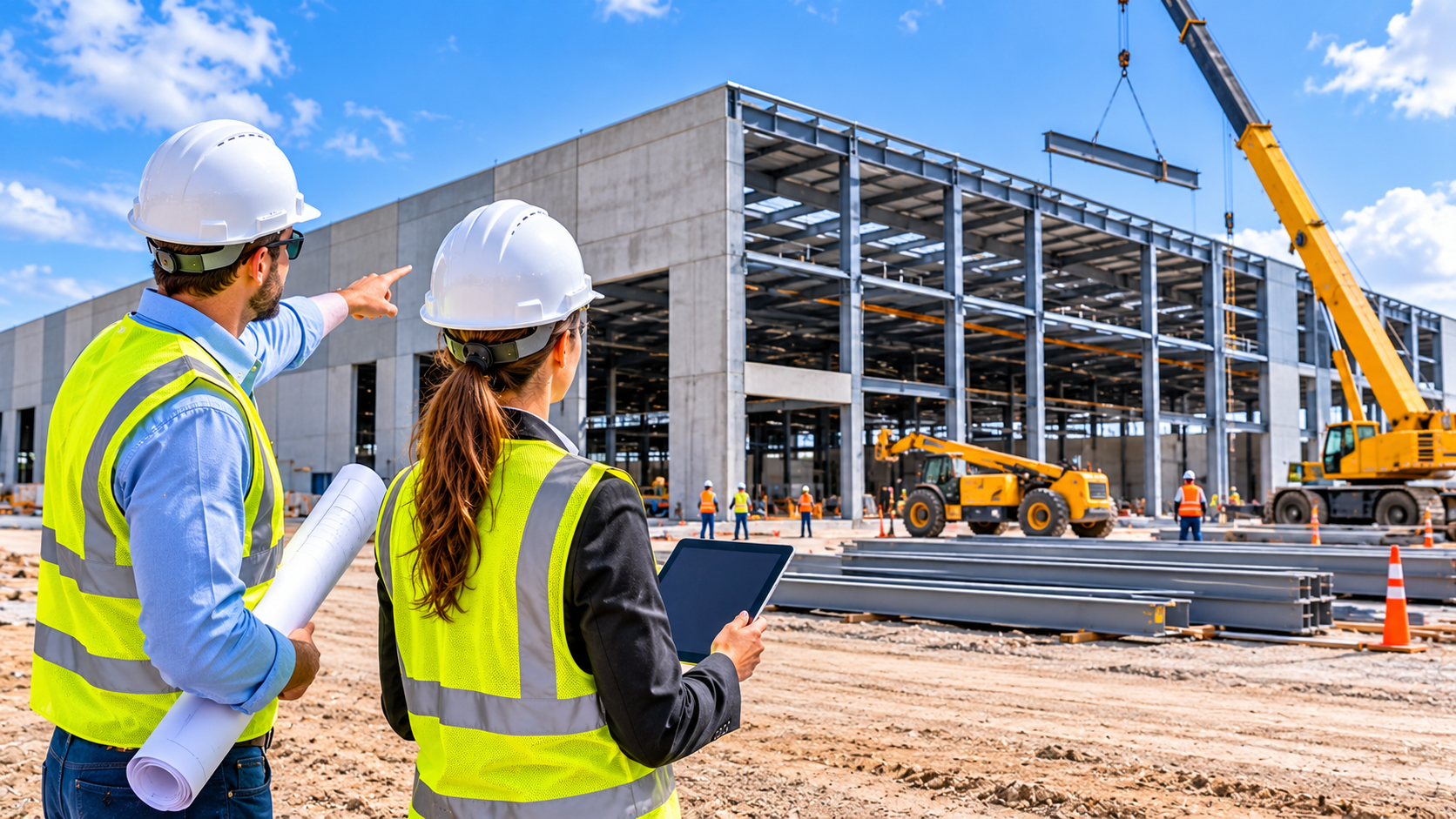
Industrial facilities play an important role in Florida's growing economy, supporting manufacturing, distribution, logistics, processing, and other essential industries. Building these facilities requires a different approach from traditional commercial construction because industrial properties must accommodate specialized equipment, heavy operations, complex electrical systems, and demanding safety requirements. Every stage, from selecting a suitable site to installing production infrastructure, requires careful planning and professional coordination.
Successful industrial construction is not simply about creating a large building. It involves developing a functional environment that supports productivity, protects employees, and accommodates future business growth. For property owners, investors, and industrial operators, understanding the construction process can help control costs, reduce project delays, and make better long-term investment decisions.
Whether you are planning a manufacturing plant, warehouse, processing facility, or distribution center, a structured development strategy provides the foundation for success. This guide explores the essential considerations involved in Florida industrial construction and explains how professional construction management contributes to better project outcomes.
1. Understanding Industrial Facility Requirements and Project Goals
Every industrial development begins with a clear understanding of how the facility will operate. Before architectural drawings or construction schedules are prepared, owners should identify the property's intended purpose, production requirements, workforce needs, and operational objectives.
Different industrial facilities have different construction demands. A manufacturing plant may require heavy machinery foundations, specialized electrical distribution, ventilation systems, and dedicated production areas. A distribution center may prioritize loading docks, warehouse storage capacity, vehicle circulation, and efficient material handling.
Developers should work with operational teams to establish important project requirements, including:
Building capacity: Determine the required floor area, ceiling heights, storage capacity, and equipment space.
Production workflow: Organize work areas to support efficient movement of materials, employees, and finished products.
Utility requirements: Identify electrical loads, water supply, drainage, compressed air, and other essential services.
Safety considerations: Plan appropriate emergency exits, fire protection, equipment clearances, and employee facilities.
Future expansion: Consider additional production lines, storage areas, and infrastructure upgrades.
These requirements influence the building's design, structural system, and overall construction budget.
Establishing clear goals early helps architects, engineers, and contractors develop a facility that supports actual business operations rather than relying on assumptions that may create expensive changes later.
2. Choosing the Right Location and Preparing the Construction Site
Location selection is one of the most important decisions in industrial facility development. Even a well-designed building can create operational challenges if the property lacks suitable transportation access, utility infrastructure, or room for future expansion.
Florida offers opportunities for industrial development through its major highways, ports, transportation networks, and growing commercial markets. However, developers must evaluate individual properties carefully before committing to construction.
Important site selection considerations include road connectivity, proximity to suppliers and customers, available labor, zoning restrictions, and access to essential utilities. Properties should also be evaluated for soil conditions, drainage, environmental limitations, and potential flood exposure.
Site preparation begins after the necessary investigations and approvals are completed. Depending on existing conditions, this stage may involve clearing vegetation, excavation, grading, soil stabilization, underground utility installation, and stormwater management improvements.
Florida's weather and environmental conditions make drainage particularly important. Heavy rainfall can affect construction schedules and create problems for poorly designed sites. Appropriate grading, drainage infrastructure, and erosion-control measures help protect the property during construction and throughout its operational life.
Developers should also consider truck access, parking, loading zones, and emergency vehicle routes when planning the site layout.
A thorough site evaluation reduces unexpected construction challenges and provides a stronger foundation for the entire development process.
3. Designing Functional and Durable Industrial Buildings
Industrial building design must balance structural performance, operational efficiency, employee safety, and long-term maintenance. Unlike conventional office buildings, industrial properties often contain specialized spaces and equipment that directly influence structural and engineering decisions.
The architectural and engineering teams should understand the facility's operational requirements before finalizing the design. For example, manufacturing operations may require reinforced concrete floors capable of supporting heavy machinery, while warehouse facilities may need high-clearance interiors and specialized storage configurations.
Structural design is especially important when buildings must accommodate heavy equipment, overhead cranes, industrial storage systems, or large mechanical installations. Engineers must evaluate applicable loading requirements and select appropriate materials and construction methods.
Building systems also require careful coordination. Electrical infrastructure should support current equipment demands and potential future upgrades. HVAC and ventilation systems should address heat generation, indoor air quality, and process-specific requirements. Plumbing, drainage, fire protection, and communication systems must also be integrated into the overall design.
For manufacturing building projects, production efficiency should remain a central consideration. Properly arranged workstations, equipment clearances, material movement routes, and maintenance access can improve daily operations and reduce unnecessary movement.
Durable roofing, exterior wall systems, industrial flooring, and weather-resistant materials are equally important. Selecting suitable materials helps protect the building from environmental exposure while reducing maintenance requirements.
An effective design creates a facility that is practical to operate, efficient to maintain, and adaptable to changing industrial needs.
4. Managing Florida Building Codes, Permits, and Safety Requirements
Industrial construction involves multiple regulatory requirements, making permitting and compliance an essential part of project planning. Developers must understand the applicable Florida Building Code, local zoning regulations, environmental requirements, and industry-specific standards.
The exact approvals depend on the property's location, intended use, building characteristics, and construction scope. Local building departments may require site development approvals, building permits, electrical permits, plumbing approvals, mechanical permits, and other authorizations.
Environmental considerations may also apply, particularly when a project involves wetlands, stormwater discharge, protected areas, or other regulated resources. Developers should evaluate these requirements before construction begins to avoid unexpected approval delays.
Safety planning deserves equal attention. Industrial facilities may involve heavy machinery, electrical equipment, material handling, and potentially hazardous production processes. Building layouts should incorporate appropriate emergency exits, fire protection systems, safety clearances, and access routes.
Construction teams must also follow applicable workplace safety requirements throughout the building process. Regular site inspections, equipment checks, worker training, and effective communication help reduce preventable incidents.
Working with experienced contractors, engineers, and permitting professionals can make compliance easier to manage. Addressing regulatory requirements during early planning is generally more efficient than correcting design problems after construction has started.
5. Budgeting, Scheduling, and Coordinating Construction Activities
Industrial construction projects often involve significant investments in materials, labor, equipment, infrastructure, and specialized building systems. A realistic budget and well-organized schedule are essential for maintaining financial control.
The project budget should account for site preparation, structural construction, roofing, electrical installations, plumbing, HVAC systems, fire protection, interior work, and exterior improvements. Specialized equipment foundations, utility upgrades, and production-related infrastructure should also be included where applicable.
Developers should establish contingency funding for unexpected site conditions, material price fluctuations, weather interruptions, and design modifications.
Scheduling requires coordination between multiple construction trades. Structural work must progress in the correct sequence, while electrical, mechanical, and plumbing installations need to align with the building's design and construction milestones.
Long-lead materials and specialized equipment should be identified early. Delays involving electrical components, industrial ventilation equipment, steel structures, or custom installations can affect the entire project timeline.
A qualified general contractor helps coordinate subcontractors, suppliers, inspections, and construction activities. Regular progress meetings and budget reviews allow the project team to identify problems early and make informed adjustments.
Effective construction management is particularly valuable for industrial facility development, where delays can affect not only construction costs but also production schedules and business operations.
Clear communication between the owner, contractor, engineers, and suppliers keeps everyone aligned with the project's objectives.
6. Improving Long-Term Efficiency and Preparing for Future Growth
A successful industrial facility should support business operations well beyond its opening day. Long-term performance depends on thoughtful infrastructure planning, durable construction materials, efficient building systems, and accessible maintenance arrangements.
Energy efficiency is an important consideration for industrial property owners. High-efficiency lighting, appropriately designed HVAC systems, insulation, and modern building controls can help manage energy consumption. Depending on operational requirements, renewable energy systems and other efficiency improvements may also be worth evaluating.
Preventive maintenance should be considered during the design and construction stages. Accessible electrical panels, service areas, mechanical rooms, and equipment access points make routine inspections and repairs easier.
Technology infrastructure is another important element. Industrial facilities increasingly rely on automated equipment, monitoring systems, communication networks, and integrated controls. Providing sufficient electrical capacity, data infrastructure, and space for future equipment upgrades helps buildings remain adaptable.
In Florida, developers should also consider hurricane preparedness, roof performance, moisture protection, and appropriate drainage systems. These measures contribute to building resilience and help protect valuable equipment and inventory.
Future expansion should remain part of the original development strategy. Additional warehouse space, production areas, loading capacity, or utility upgrades may become necessary as a business grows.
A facility designed with these considerations can provide greater operational flexibility and long-term value.
Conclusion
Industrial facility construction in Florida requires detailed planning, technical expertise, and effective coordination between property owners, engineers, contractors, and specialized trades. From site selection and building design to regulatory compliance, budgeting, and final construction, every stage influences the performance of the completed facility.
Successful Florida industrial construction projects begin with a clear understanding of operational needs and continue through carefully managed construction and quality control. By investing in durable materials, efficient building systems, and flexible infrastructure, developers can create facilities that support productivity and future business growth.
Keentel General Contractors delivers commercial, industrial, institutional, and large-scale residential construction services with a focus on quality, safety, and coordinated project execution. With the right planning and an experienced construction partner, industrial property owners can move forward with greater confidence and build facilities designed to meet demanding operational requirements.