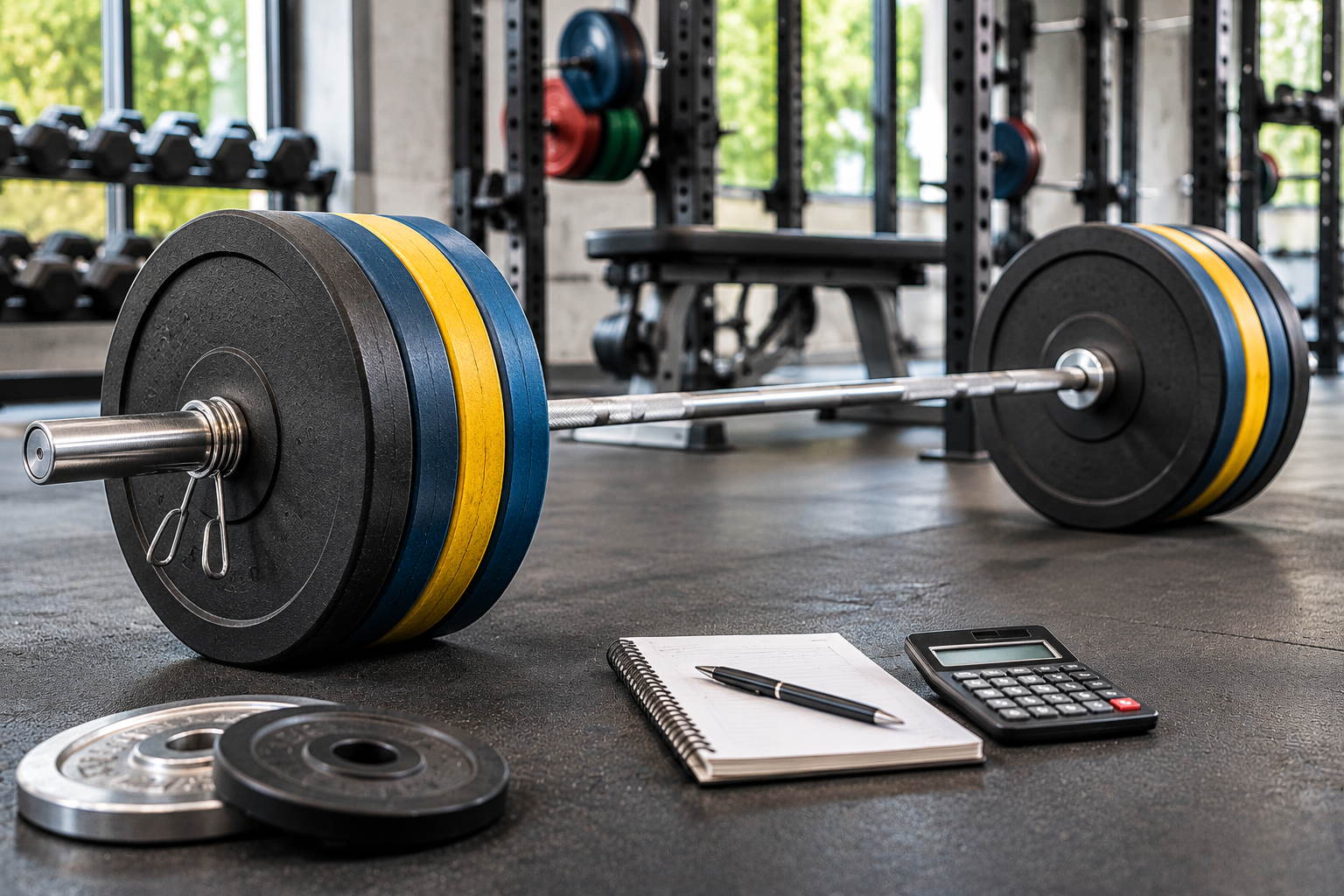
Walk into any gym and you will see two kinds of lifters. One kind trains by feel, adding weight when the day seems good and easing off when it does not. The other kind opens a notebook or a phone, checks exactly what they lifted last time, and knows before the first set what today asks of them.
Months later, the second lifter is almost always the stronger one. The difference is not talent or effort. It is tracking.
This guide shows you how to record your training in a simple way that actually gets used. You will learn what to write down, how to read your own numbers, and how to tell real progress from a good day. No complicated systems, no spreadsheets with forty columns. Just the few habits that turn guesswork into knowledge.
Write Down the Few Numbers That Matter
Every working set produces four facts worth keeping. The exercise, the weight, the repetitions, and how many sets you did. That is the core of any useful log. If you record only those four things after every session, you already track better than most people in your gym.
A few extra notes earn their space when they explain the numbers. A short remark about sleep, soreness, or a grip that slipped can explain why a lift felt harder than last week. Keep remarks brief, a few words at most. A log that takes ten minutes to fill in is a log you will abandon by February, so protect the habit by keeping it quick.
Use One Rep Max Estimates to Compare Apples With Apples
The trouble with raw numbers is that they are hard to compare across different sessions. Is five repetitions with one weight better or worse than three repetitions with a heavier one? An estimated one rep max answers that. It converts any hard set into the single number it suggests you could lift once, which lets you compare sessions, exercises variations, and even whole training blocks fairly.
You do not have to test a true maximum to use this idea, and you should not test one often. Heavy single attempts carry the most risk and the most fatigue of anything in the gym. Working from solid sets of three to eight repetitions gives an estimate that is close enough to guide training and far safer to collect. To turn your recent sets into clear estimates and training percentages, the strength training calculators and guides at OneRepMaxCalculators do the arithmetic instantly and show what your numbers mean for your next session.
Look for Trends Across Weeks, Not Days
A single session proves almost nothing. Strength moves in waves, and a tired Tuesday can hide a month of real improvement. Judge your progress across blocks of three to six weeks instead. If your estimated best on a lift is higher than it was a month ago, you are progressing, whatever last session felt like.
This longer view also protects your motivation. Plateaus of two or three weeks are normal, especially once you are past the beginner stage. A plateau of six weeks, with sleep and food in order, is a signal to change something. Perhaps the exercise variation, the repetition range, or the weekly volume. Without records, both situations feel identical, and people quit during plateaus that were about to end.
Track More Than the Barbell
The weight on the bar is the headline, but it is not the whole story. Note your body weight once a week or so, taken at the same time of day. Strength gained while body weight holds steady is a different achievement from strength gained while gaining size, and both matter for how you plan food and training.
Simple performance markers help too. The first time you complete every planned repetition of a hard programme, the first pull up, the first pain free squat session after an injury. These milestones rarely show in a weight column, yet they are real progress. A line in your log preserves them, and reading old milestones on a hard day is fuel.
Review Your Log on a Schedule
Records only help if you read them. Spend five minutes once a week looking back at your sessions. Ask three questions. Did my main lifts move forward, hold, or slip? Did I complete the work I planned? Is there one small change that would make next week better? Write the answers down and let them shape the week ahead.
A monthly review goes one level deeper. Compare your current estimates with those from the start of the month, check your body weight trend, and decide whether the plan still fits your goal. This rhythm of small weekly checks and one monthly judgement is what coaches do for their athletes. Doing it for yourself costs almost nothing and returns the same clarity.
Simple Records, Honest Progress
Tracking works because it replaces feelings with facts. Feelings say you are stuck when you are tired, and say you are flying when you are merely fresh. Your log knows the truth in both cases.
Start with the next session, write down the exercise, the weight, the repetitions, and the sets, and add an estimated one rep max for your main lift. In a month you will own something most lifters never have. A clear picture of where you started, where you are, and exactly what to do next.