






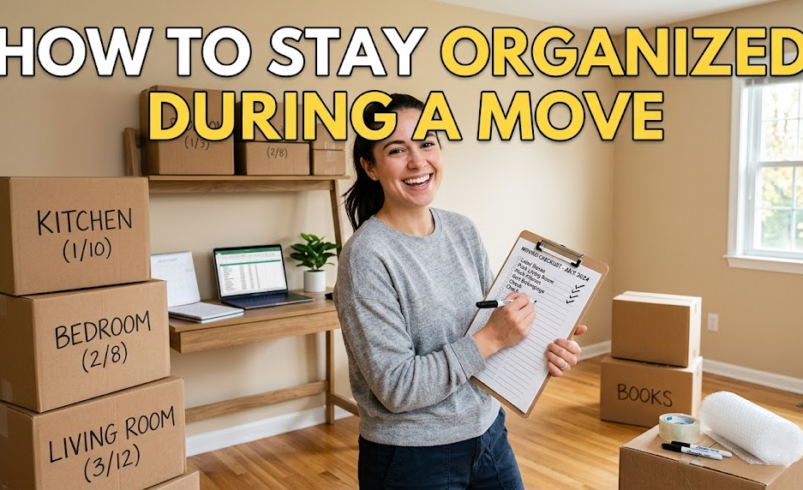
Moving to a new home can be exciting, but the process often involves dozens of small decisions, deadlines, boxes, documents, and moving-day details. Without a clear system, it is easy to lose track of what has been packed, what still needs attention, or where important belongings have gone. Learning how to stay organized during a move helps reduce unnecessary stress and makes the entire relocation process easier to manage.
Whether you are moving across town or relocating to another state, professional Moving Services Boston can handle much of the physical work, but good organization on your part is still essential. A well-planned move allows you to communicate clearly with movers, protect important belongings, avoid last-minute packing, and settle into your new home more efficiently.
Start With a Moving Timeline
One of the most effective ways to stay organized is to begin planning well before moving day. Instead of trying to complete everything at once, divide the process into manageable stages. Your timeline should include tasks such as decluttering, gathering packing supplies, notifying service providers, packing different rooms, confirming your moving arrangements, and preparing your new home.
For a larger household, starting several weeks in advance can give you enough time to work at a steady pace. Begin with tasks that do not affect your daily routine, such as sorting storage areas, seasonal clothing, books, decorations, and rarely used kitchen equipment. Leave everyday essentials for later.
A written timeline also gives you a reference point when the move becomes busy. Digital calendars, spreadsheets, notes apps, or a simple paper planner can all work. The important thing is to choose one system and consistently update it.
Declutter Before You Pack
Packing everything you own without sorting it first creates unnecessary work. Before placing items in boxes, decide what you actually want to take with you.
Use the process to separate belongings into practical categories such as keep, donate, sell, recycle, and discard. Ask yourself whether an item is useful, regularly used, valuable to you, or suitable for your new home. If something has been sitting unused for years, moving it may simply transfer clutter from one house to another.
Decluttering can also make your inventory easier to manage. Fewer belongings mean fewer boxes to label, track, transport, and unpack. However, avoid rushing into difficult decisions simply because you are under pressure. Give yourself enough time to consider sentimental or important possessions carefully.
Create a Room-by-Room Packing Strategy
Instead of packing randomly, work through your home one area at a time. Completing one room before moving to another gives you a clear sense of progress and makes it easier to identify what remains.
Start with rooms or items you use less frequently. Guest rooms, storage spaces, garages, seasonal decorations, and rarely used appliances are often good starting points. As moving day gets closer, pack everyday items while leaving enough essentials available for normal routines.
A room-by-room approach also makes labeling much more effective. Rather than writing only “kitchen” on a box, consider adding a brief description such as “Kitchen – pots and pans” or “Bedroom – winter clothes.” This provides useful information when it is time to unpack.
Label Every Box Clearly
Good labeling is one of the simplest ways to improve organization during a move. Every box should have enough information to tell you where it belongs and what it contains.
A useful labeling system can include the destination room, general contents, and whether the box contains fragile items. For example, a label might read: “Master Bedroom – Bedding – Open First.”
You can also number boxes and maintain a basic inventory. If you have 35 boxes, for example, numbering them from 1 to 35 allows you to identify whether everything arrived at the new home.
Write labels on multiple sides of each box rather than only on the top. Boxes may be stacked during transportation, making top labels difficult to see.
Keep Important Documents Separate
Some belongings should never be buried in a moving truck. Keep essential documents and valuable personal items with you whenever possible.
This may include identification documents, passports, financial records, property paperwork, lease agreements, insurance information, medical records, keys, and other paperwork you may need immediately. Store them together in a clearly identified folder, document case, or secure bag.
The same principle applies to small valuables, electronics, medication, jewelry, and other items that are particularly important to you. Keeping these possessions accessible gives you greater control during the transition.
Prepare an Essentials Box
An essentials box can make the first night in your new home much easier. Instead of searching through dozens of sealed cartons for basic necessities, prepare one or more clearly marked boxes containing the things you are likely to need immediately.
Consider including toiletries, basic cleaning supplies, phone chargers, toilet paper, towels, a change of clothes, basic kitchen items, snacks, bottled water, simple tools, and important household supplies. If you have children or pets, prepare separate essentials for their immediate needs as well.
Keep these boxes easy to identify and load them somewhere accessible rather than underneath heavier boxes.
Create a Moving Inventory
A moving inventory does not need to be complicated. Its purpose is to give you a quick overview of what you are transporting.
You can create a spreadsheet with columns for the box number, room, contents, and special notes. For valuable items, photographs can provide an additional record of their condition before transportation.
An inventory is particularly useful when a move involves many boxes. If you need something specific after arriving, you can check the inventory instead of opening boxes at random.
For expensive or fragile belongings, documenting their condition before the move can also provide useful records for your own files. Always follow the mover’s procedures regarding valuation, claims, and documentation.
Keep a Moving-Day Folder
Moving day often involves contracts, contact information, receipts, instructions, keys, and other details. Keeping these items together can prevent unnecessary searching.
Create a physical or digital moving folder containing your moving company’s contact information, confirmation details, payment information, inventory notes, important addresses, and your moving-day schedule.
If you are working with professional movers, confirm the arrival window, access instructions, parking considerations, and any special requirements before moving day. Clear communication can prevent avoidable delays.
Use a “First Week” Plan
Organization should not stop once the boxes arrive. The first few days in a new home can quickly become chaotic if everything is opened at once.
Instead, prioritize essential spaces. The bedroom, bathroom, and kitchen are often more important than decorative areas. Having a usable bed, basic bathroom supplies, and simple kitchen equipment can make the transition significantly more comfortable.
Do not feel pressured to unpack your entire home immediately. Work systematically and dispose of packing materials as rooms are completed. Breaking the process into smaller tasks makes it easier to see progress.
Protect Your Moving-Day Schedule
A well-organized moving day depends on realistic scheduling. Leave enough time for loading, transportation, unloading, and unexpected delays. Avoid scheduling important appointments immediately after the expected arrival time if they can be postponed.
Before movers arrive, make sure pathways are reasonably clear and that boxes are ready to be transported. If certain items are not being moved, identify them clearly so they are not accidentally loaded.
If you are moving into an apartment or building with specific access rules, confirm elevator reservations, loading zones, parking restrictions, or building requirements ahead of time. Small logistical details can have a major effect on how smoothly the day goes.
Use Technology Without Overcomplicating Things
Technology can make moving organization easier, but you do not need a complicated system. A shared checklist, calendar reminder, cloud-based inventory, or smartphone camera can be enough.
Photographing the contents of boxes before sealing them can help you remember what is inside. Digital reminders can also help you keep track of utility transfers, address changes, appointments, and important deadlines.
The key is consistency. Using five different apps may create more confusion than using one simple system that you actually maintain.
Common Organization Mistakes to Avoid
One of the most common mistakes is waiting until the final few days to begin packing. Last-minute packing often leads to poorly labeled boxes, misplaced essentials, and unnecessary stress.
Another mistake is mixing items from multiple rooms into the same box without clear labeling. While combining small belongings can save space, unclear boxes make unpacking much harder.
It is also wise to avoid overloading boxes. Heavy items should generally be placed in appropriately sized boxes so they remain manageable and less likely to cause damage. Fragile belongings should be packed with suitable protective materials and clearly identified.
Finally, do not forget the administrative side of moving. Address updates, utility arrangements, insurance considerations, building requirements, and other paperwork deserve the same attention as packing.
A Simple Formula for an Organized Move
The easiest way to remember the process is to think in five stages: plan, declutter, pack, label, and track.
Plan your timeline before starting. Declutter so you only move what you need. Pack systematically rather than randomly. Label every box clearly. Then track important belongings, documents, deadlines, and arrangements.
This approach creates a reliable structure without making the move unnecessarily complicated.
Conclusion
Staying organized during a move is less about doing everything perfectly and more about creating a system you can follow. Start early, declutter before packing, organize belongings by room, label boxes clearly, protect important documents, prepare an essentials box, and keep a simple inventory. These habits can make both moving day and the unpacking process much more manageable. Whether you handle the move independently or coordinate with East Coast Boston Movers, having a clear plan gives you greater control over the process and helps you begin life in your new home with less confusion. With a little preparation and a consistent system, moving can become a structured transition rather than an overwhelming task.