




What Are AI Tools Like ChatGPT — And Why They're Changing Everything
A human-written deep dive into the world's top AI platforms — how they work, which ones to use, and how to measure the traffic impact on your content strategy.
Let's be real — the phrase "AI tools like ChatGPT" gets thrown around so much that it's lost some of its meaning. But underneath the hype lies a genuinely transformative shift in how people write, code, research, design, and build. This guide cuts through the noise.
Whether you're a content creator, marketer, developer, or just curious, this comprehensive resource from Speora breaks down what these tools actually are, how they differ, and — crucially — how to use them to drive measurable traffic to your website.

What Exactly Are AI Tools Like ChatGPT?
AI tools are software applications powered by large language models (LLMs) — neural networks trained on vast amounts of text data to understand and generate human-like language. ChatGPT, developed by OpenAI, was the one that brought this technology to the mainstream in late 2022. Since then, dozens of competitors have emerged.
Think of them as incredibly well-read assistants that can write, summarize, translate, explain, debug, brainstorm, and converse — at superhuman speed. They don't "think" the way humans do; they predict what comes next based on patterns in data. But the output can be remarkably useful.
"AI tools don't replace human creativity — they amplify it. The best results come from humans who know how to direct these tools with precision and purpose."
According to industry data, over 100 million people used AI writing and productivity tools monthly by early 2026. The growth curve is steep — and understanding these tools is no longer optional for serious content creators.
Top AI Tools in 2026 — Beyond ChatGPT
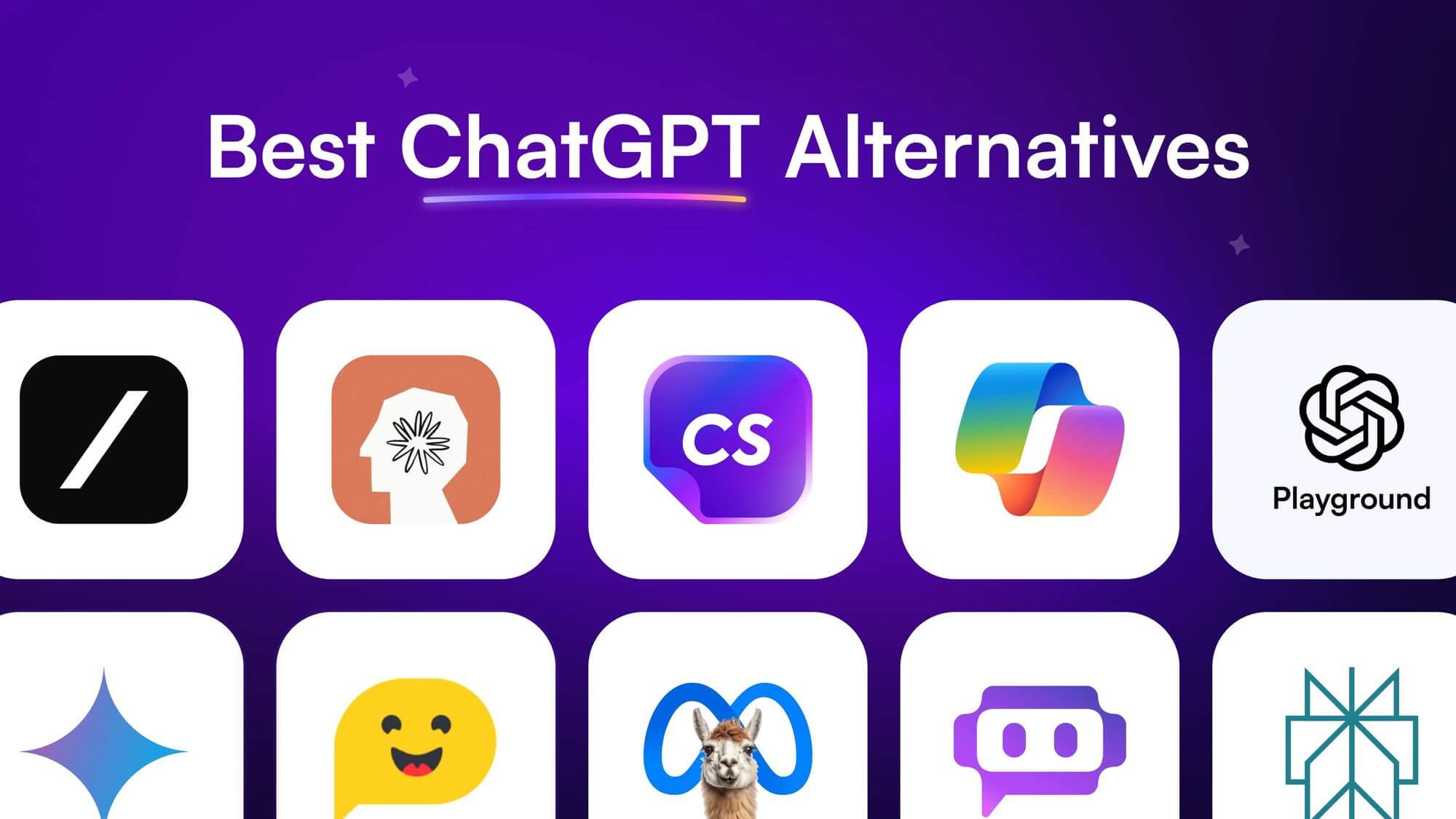
ChatGPT may have started the conversation, but the landscape has exploded. Here's a look at the major players you should know about, each with its own strengths and ideal use cases:
ChatGPT (OpenAI)
The original. Best for general writing, coding, brainstorming, and customer support bots.
FreemiumClaude (Anthropic)
Excellent for long-form writing, nuanced reasoning, and document analysis.
FreemiumGemini (Google)
Deeply integrated with Google Search and Workspace. Great for research-heavy tasks.
FreemiumMidjourney
Industry-leading AI image generation. Used by designers and marketers worldwide.
PaidPerplexity AI
A search-first AI that cites sources. Perfect for research and fact-checking.
FreemiumJasper AI
Purpose-built for marketing teams. Strong brand voice consistency features.
PaidFor a constantly updated directory of AI tools with user reviews, visit the Speora AI Tools Hub — one of the most comprehensive free resources available.
How Do These AI Tools Actually Work?
Without getting lost in academic jargon, here's the simplified version: these tools are built on transformer architecture, a type of neural network that processes words in context rather than sequentially. They're trained on web pages, books, code repositories, and more — often hundreds of billions of tokens of text.
When you type a prompt, the model doesn't "look up" an answer. It generates a response word-by-word (technically, token-by-token), predicting what should come next based on everything it learned during training.
The Prompt Is Everything
Your input — the "prompt" — determines the quality of your output more than the tool itself. A vague prompt gets vague results. A specific, well-structured prompt unlocks genuinely impressive output. This is why prompt engineering has become a sought-after skill in 2026.

Step-by-Step Tutorial: Using AI Tools for SEO Content
Ready to put these tools to work? Here's a proven workflow used by the editorial team at Speora Blog to produce high-ranking, human-quality content.
Keyword Research First
Before touching any AI tool, identify your target keyword using tools like Ahrefs, Semrush, or Google Search Console. Aim for keywords with decent search volume (500–10,000/month) and low-to-medium competition. Example: "AI tools for small business 2026."
Build Your Outline with AI
Use ChatGPT or Claude to generate a detailed blog outline. Prompt: "Create a detailed blog outline for [keyword]. Include an intro, 6 H2 sections with sub-points, and a conclusion. Add FAQs."
Draft Section by Section
Don't prompt the AI for the whole post at once. Write section by section, injecting your own examples, statistics, and opinions. This is what separates authentic content from robotic output. Add internal links to Speora naturally.
Edit for Human Voice
Read aloud and edit heavily. Remove AI tells: phrases like "In today's fast-paced world," "It's worth noting," or overly balanced conclusions. Add personality, contrarian takes, and real examples.
Optimize On-Page SEO
Include your primary keyword in: the title, first 100 words, at least two H2s, meta description, and image alt text. Add 3–5 internal links and 2–3 authoritative external links.
Publish, Index & Monitor
Submit to Google Search Console for indexing. Set up a Google Analytics 4 goal to track page views, scroll depth, and conversions. Review performance at 30, 60, and 90 days.
AI Tools Comparison: Which One Is Right for You?
| Tool | Best For | Free Tier | API Access | SEO Content | Image Gen |
|---|---|---|---|---|---|
| ChatGPT | General writing & coding | ✓ | ✓ | ✓ | ✓ |
| Claude | Long documents, reasoning | ✓ | ✓ | ✓ | ✗ |
| Gemini | Research & Google integration | ✓ | ✓ | ✓ | ✓ |
| Perplexity | Cited research & fact-checking | ✓ | ✓ | ✓ | ✗ |
| Midjourney | Visual content creation | ✗ | ✗ | ✗ | ✓ |
| Jasper | Marketing copy at scale | ✗ | ✓ | ✓ | ✓ |
How to Measure Traffic from Your AI-Powered Blog
Publishing is only half the battle. If you're investing time in AI-assisted content — as we do at Speora — you need to know what's working. Here are the key metrics that matter:
The 4 Traffic Metrics You Must Track
- Organic Impressions & Clicks — Use Google Search Console. Track weekly to see if your keyword rankings improve post-publication.
- Scroll Depth & Time on Page — In GA4, set up scroll events. A post with 60%+ scroll depth signals strong content quality to Google.
- Bounce Rate vs. Engagement Rate — GA4 uses engagement rate (sessions > 10 seconds or 2+ pages). Target 55% or higher.
- Backlinks Acquired — Use Ahrefs or Semrush. Quality AI content earns natural backlinks. Track referring domains monthly.
SEO Tips for AI-Written Content That Actually Ranks
Google's algorithms have grown sophisticated enough to reward quality and penalize thin, templated AI content. Here's how to stay on the right side of the algorithm — while still leveraging AI for speed.
- Add original research or data. Even one original stat or chart (like those in this post) makes your content more linkable and trustworthy.
- Write for search intent. Understand if the searcher wants to learn, compare, or buy — and structure your content accordingly.
- Use E-E-A-T signals. Experience, Expertise, Authoritativeness, Trustworthiness. Include an author bio, cite sources, and link to credible references.
- Internal linking is non-negotiable. Link to relevant pages on Speora.org like the AI Tools Directory and Blog. This distributes link equity and keeps readers on your site.
- Optimize for featured snippets. Answer common questions clearly and concisely in 40–60 words. Use definition-style H2s like "What Is [topic]?"
- Update content regularly. AI topics evolve fast. Refreshing a post every 3–6 months maintains rankings.
Final Thoughts: The Human Advantage Remains
AI tools like ChatGPT, Claude, and Gemini are genuinely remarkable. They've lowered the barrier to creating good content, writing code, and solving problems. But they haven't replaced the most important ingredient: a human perspective with something real to say.
The blogs that win in search aren't the ones that used AI the most — they're the ones that used AI smartly, in service of content that genuinely helps people. That's the philosophy at Speora, and it's the approach this guide reflects.
Use the tools. Learn the craft. Measure obsessively. And keep the human firmly in the loop.
Ready to explore more? Visit the Speora AI Tools Hub for curated reviews, or check out our full blog archive for more guides like this one.