


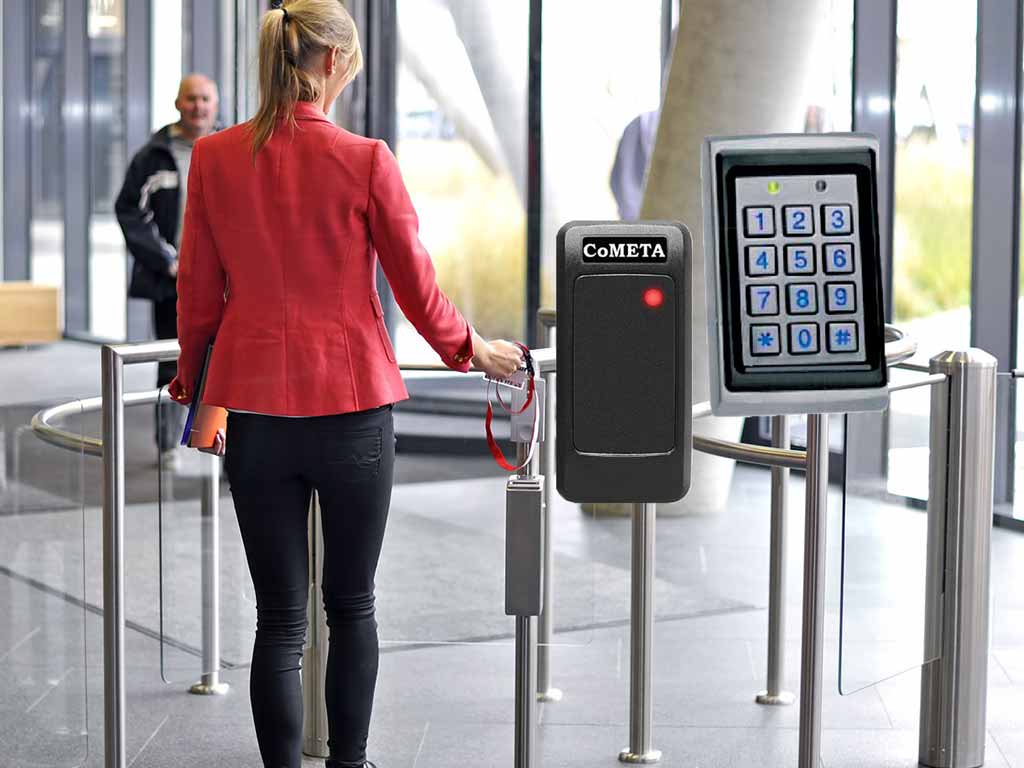



Alafaya’s commercial corridor continues to expand. With new office developments, flex spaces, and multi-tenant business parks filling in along the University of Central Florida corridor and surrounding areas, property managers face access control challenges that did not exist five years ago. Tenant rosters change frequently, vendor traffic fluctuates by season, and after-hours security requires more than a locked door and a camera.
This article covers what Alafaya’s commercial property managers should prioritize when evaluating commercial access systems Alafaya properties need in 2026, and where outdated approaches fall short.
Multi-Tenant Access: The Core Challenge
Business parks with multiple tenants sharing lobbies, parking structures, and common areas present a layered access problem. Each tenant needs independent credentials for their suite, but the property manager needs centralized oversight across the entire building. Traditional lock-and-key or standalone keypad systems cannot deliver this.
Commercial access systems in Alafaya used by business parks are now adopting cloud-based credentialing to assign permissions by tenant, floor, and time of day. When a new tenant moves in, credentials are provisioned remotely in minutes. When a lease ends, access is revoked the same day. There is no rekeying, no fob collection, and no gap between move-out and credential deactivation where unauthorized entry could occur.
For Alafaya properties with high tenant turnover, such as co-working spaces, medical offices, and professional service firms, this speed and control directly reduces vacancy-related security risk.
Vendor and Contractor Management
Commercial properties rely on a steady flow of vendors: janitorial crews, IT contractors, HVAC technicians, and delivery services. Each one needs access to specific areas at specific times, and each one represents a potential security gap if their credentials are not properly managed.
Commercial door access control systems in Alafaya used by property managers are implementing allow vendor passes to be:
● Time-restricted so access expires at the end of the service window
● Zone-limited to only the floors or areas relevant to the work
● Logged with entry and exit timestamps for audit purposes
● Revoked instantly if a contract is terminated or a vendor is flagged
This level of control is not possible with physical keys or shared codes. It also reduces liability exposure by documenting exactly who was in the building and when.
After-Hours Security
Most commercial security incidents occur outside business hours, when buildings are empty, and monitoring is limited. A locked front door is not sufficient when side entrances, loading docks, and parking garage gates are accessible with duplicated fobs or codes that were never deactivated.
Commercial door access control systems in Alafaya, deployed by forward-thinking property managers, are addressing this vulnerability by enforcing time-based access rules across every entry point in the building. Credentials that work during business hours can be programmed to deny access after 6 PM or on weekends unless the user has been granted an after-hours exception. Every attempted entry outside of authorized windows is flagged and logged, giving property managers immediate visibility into suspicious activity.
Combined with license plate recognition at garage and lot entrances, the system creates a layered perimeter that does not depend on on-site security staff to function around the clock.
Why Alafaya Properties Need Local Dealer Support
Software capabilities matter, but so does the team behind the installation. Alafaya’s commercial properties are best served by a local integrator who understands the building types, traffic patterns, and operational realities of the corridor.
Qualified local dealers can provide on-site assessments, system design, licensed installation, and direct ongoing support from Central Florida. For Alafaya property managers, this means a partner who can walk the property, configure the system to the building’s specific layout, and respond quickly when service is needed, rather than routing requests through a national call center.
Planning for 2026 and Beyond
If your Alafaya commercial property still relies on standalone keypads, shared codes, or unmanaged fob systems, the gap between your current setup and what tenants and insurers now expect is widening. Commercial access systems today should be cloud-managed, scalable to new buildings or floors, and backed by a local dealer who stays involved long after installation day.
A site consultation is the starting point — a proper assessment identifies where your current system falls short and produces a design that matches your property’s access points, tenant mix, and operational priorities for the year ahead. The longer outdated infrastructure stays in place, the more you spend maintaining it and the more risk you absorb with every untracked entry.