


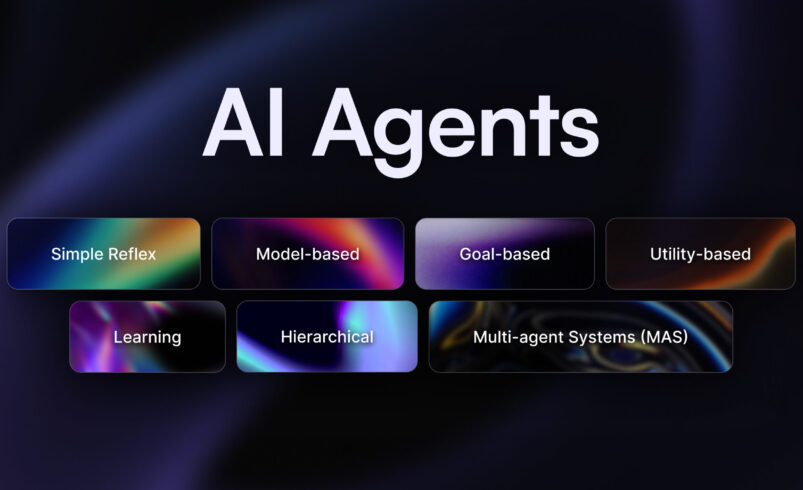
The Age of
AI Agents
Is Here
A definitive deep-dive into AI agents — what they are, which niches they’re disrupting, the key insights nobody talks about, and a full side-by-side comparison of the top platforms in 2026.
What Is an AI Agent?
AI agents are not just chatbots. They are autonomous systems capable of perceiving, planning, acting, and learning — continuously — without constant human instruction.
While a standard AI model answers a question and stops, an AI agent takes goals as input and figures out the steps to achieve them. It browses the web, writes and executes code, calls APIs, manages files, and loops back on its own output until the task is done.
The shift from “AI as a tool” to “AI as a worker” is the defining technology story of 2026. Enterprises are no longer just experimenting with agents — they’re deploying them in production, replacing entire workflow layers, and building agent-native products from scratch.
The core architecture of an AI agent consists of four components: a perception layer (what it sees/reads), a memory system (short-term context + long-term vector storage), a planning engine (reasoning and task decomposition), and action tools (APIs, browsers, code executors). When these four work together, you get a machine that can work autonomously for hours.
The Hottest AI Agent Niches
Not all agent use cases are equal. These eight niches are where agent adoption is fastest, ROI is clearest, and the competitive gap between early adopters and laggards is growing most dramatically.
Deep Insights Nobody Talks About
The bottleneck in AI agent adoption is not capability — it’s trust. Organizations are sitting on technology that could automate 40% of their workflows, but can’t pull the trigger because they don’t know when the agent will fail.
— Emerging consensus across enterprise AI deployments, 2026The “Last Mile” Problem Is the Real Barrier
Most agents perform brilliantly on 80% of tasks and catastrophically on 20%. This is not a model quality issue — it’s a context boundary issue. Agents fail when they hit edge cases outside their training distribution. The companies winning with agents have built robust human-in-the-loop checkpoints for that 20%, not eliminated them.
Critical InsightMemory Architecture is the Competitive Moat
Two agents using the same LLM can produce dramatically different results based solely on their memory architecture. Episodic memory (what happened), semantic memory (what is known), and procedural memory (how to do things) — agents that implement all three meaningfully outperform those that don’t. This is where deep differentiation is built.
ArchitectureMulti-Agent Systems Beat Single Agents — Always
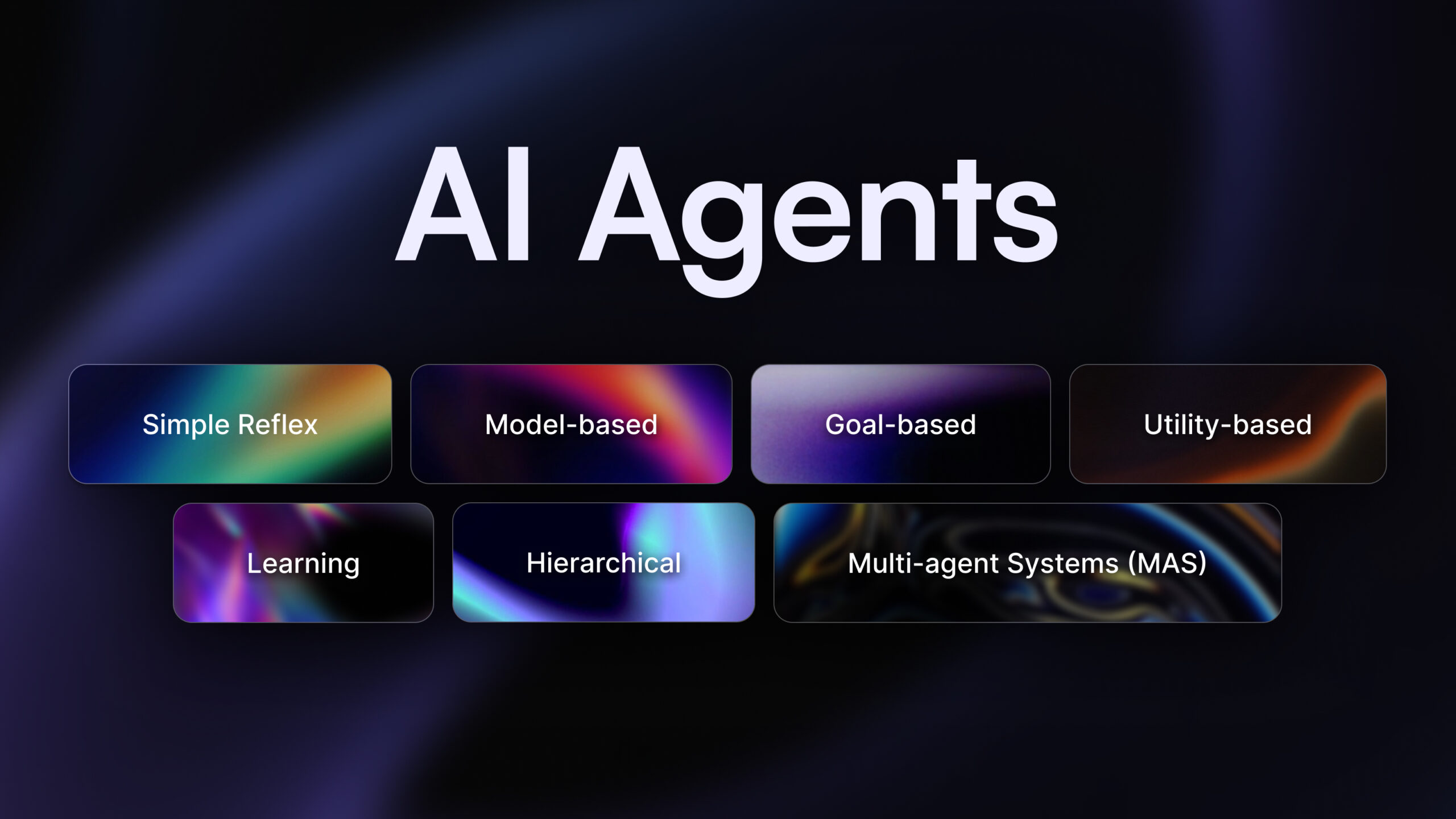
A single generalist agent trying to do everything is less reliable than a swarm of specialized agents that coordinate. The orchestrator-worker model (one planning agent + multiple specialist workers) is emerging as the dominant architecture for complex enterprise workflows. Think less “one genius” and more “a well-managed team”.
ArchitectureToken Cost is Collapsing — Agent Economics Are Changing Fast
In 2023, running a complex agent workflow cost hundreds of dollars per task. In 2026, the same workflow costs cents. Cost is no longer the bottleneck — reliability and integration depth are. Builders who optimized for cost efficiency in agent design are now finding that reliability investment pays back faster.
EconomicsAgents With Long-Horizon Planning Win
Short-context agents (those limited to a single session) have fundamental limitations. The agents seeing the most enterprise adoption have persistent state across sessions — they can start a task on Monday, pause, and resume Thursday with full context. This is the capability that finally makes agents feel like coworkers, not tools.
CapabilitySecurity & Trust Are the Next Frontier
Agents that can take real-world actions — send emails, make purchases, modify databases — introduce a new attack surface: prompt injection. Malicious content in the environment (a webpage, a document) can hijack an agent’s behavior. This is not a theoretical concern — it’s an active exploit class, and it will define agent platform security standards in 2026–2027.
SecurityPlatform Comparison
The major AI agent platforms have each carved out different strengths. Here’s how the top contenders stack up across the dimensions that matter most for builders and enterprises.
Strengths
- Massive plugin ecosystem
- Best-in-class code interpreter
- GPT-4o speed
- Strong enterprise support
Weaknesses
- High API costs at scale
- Limited memory depth
- Closed architecture
Strengths
- 200K context window
- Superior instruction-following
- Excellent at complex reasoning
- Strong safety controls
Weaknesses
- Smaller tool ecosystem
- Slower at speed tasks
- Less multimodal depth
Strengths
- Real-time audio/video
- Deepest Google integration
- 1M+ token context
- Fast inference
Weaknesses
- Less predictable outputs
- Weaker at coding tasks
- Fewer third-party integrations
Strengths
- Fully customizable
- Model-agnostic
- Multi-agent native
- Free & open source
Weaknesses
- High engineering overhead
- No managed hosting
- Steep learning curve
Full Feature Matrix
| Platform | Context Window | Multi-Agent | Memory | Tool Use | Open Source | Pricing |
|---|---|---|---|---|---|---|
| OpenAI (GPT-4o) | 128K tokens | ✓ | Partial | ✓ Rich | ✗ | $$$ |
| Claude (Anthropic) | 200K tokens | ✓ | ✓ Projects | ✓ MCP | ✗ | $$ |
| Gemini 1.5 Pro | 1M tokens | Limited | Partial | ✗ | $$ | |
| LangChain / LangGraph | Model-dependent | ✓ Native | ✓ Custom | ✓ Any | ✓ | Free / Self-hosted |
| AutoGen (Microsoft) | Model-dependent | ✓ Native | ✓ Custom | ✓ Any | ✓ | Free / Self-hosted |
| CrewAI | Model-dependent | ✓ Core feature | Basic | ✓ Any | ✓ | Free / Cloud $ |
| Devin (Cognition) | Long | ✗ | ✓ Session | ✓ Dev tools | ✗ | $$$$ |
| AWS Bedrock Agents | Model-dependent | ✓ | ✓ Knowledge Base | ✓ AWS | ✗ | Pay-per-use |
Best Tutorials to Get Started
Skip the noise. These are the most effective, up-to-date learning resources — from official docs to hands-on video courses — for building real AI agents in 2026.
The Verdict
The Bottom Line
AI agents in 2026 are no longer a research curiosity — they are a production reality. The question is no longer “should we use agents?” but “which architecture fits our risk tolerance, workflow complexity, and team capability?”
The platforms are converging on capability, but diverging on reliability, safety, and ecosystem depth. Pick the one that matches your threat model. For most builders: start with Claude or OpenAI for the fastest time-to-value. Graduate to custom multi-agent stacks (LangGraph, AutoGen, CrewAI) when your use case demands it.
The companies that win the next decade won’t be the ones that used AI — they’ll be the ones that built trusted, reliable agent workflows into the core of how they operate.