



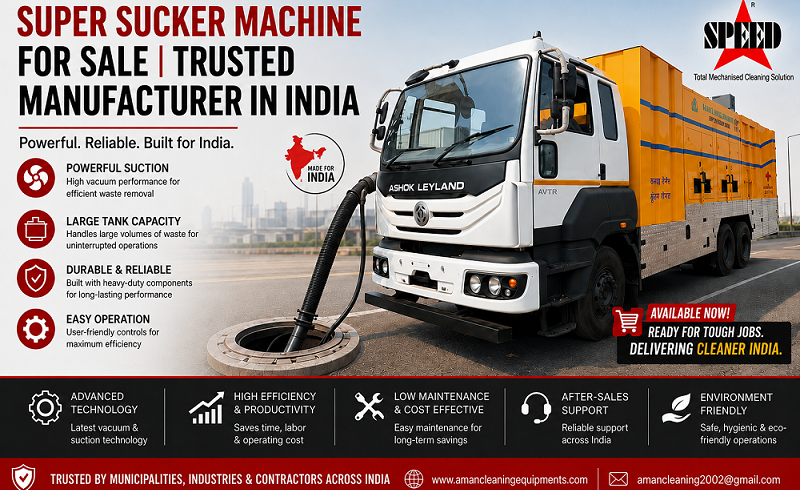
A super sucker machine is a high-power vacuum unit built to remove sludge, debris, liquid waste, and blockages from drains, sewers, and industrial tanks. Municipal corporations, factories, and waste management contractors across India use this equipment because manual cleaning cannot match its speed or safety standards.
Unlike a standard vacuum tanker, a super sucker machine combines suction, jetting, and storage capacity in one unit. This makes it a preferred choice for large-scale sanitation projects, especially in cities dealing with heavy monsoon drainage loads.
Why Indian Industries Are Adopting Super Sucker Machines
India’s push toward mechanized sanitation, backed by Swachh Bharat Mission guidelines, has increased demand for reliable equipment. Manual scavenging is now restricted by law, which pushes municipalities and private contractors toward machines that can handle hazardous waste safely.
An Indian super sucker machine typically features:
- High-suction vacuum pumps rated for continuous industrial use
- Corrosion-resistant storage tanks for sludge and wastewater
- Long-reach hoses for deep sewer line access
- Diesel or PTO-driven power systems suited to Indian road and terrain conditions
- Compliance with pollution control board disposal norms
These features make the equipment suitable for municipal sewer maintenance, construction site dewatering, and factory effluent handling.
Key Uses of a Super Sucker Machine for Drain Cleaning
A super sucker machine for drain clean operations solves problems that manual labor and basic jetting machines cannot. Common applications include:
- Clearing choked stormwater drains before monsoon season
- Removing silt and construction debris from manholes
- Desludging septic tanks and soak pits
- Cleaning industrial effluent channels
- Emergency response for flooded underground chambers
Because the machine operates through remote suction, workers avoid direct contact with hazardous waste, reducing health risks significantly.
How to Choose the Best Industrial Super Sucker Machine
Buyers evaluating a best industrial super sucker machine should compare a few technical factors before finalizing a purchase:
- Suction Capacity – Measured in CFM (cubic feet per minute); higher capacity handles thicker sludge faster.
- Tank Volume – Ranges from 3,000 to 12,000 liters depending on project scale.
- Chassis Compatibility – Confirm the unit fits standard Indian truck chassis for easier maintenance.
- After-Sales Support – Spare parts availability matters more than the initial price tag.
- Certification – Check for pollution control and safety compliance documentation.
Buyers researching super sucker machine manufacturing should also ask vendors about warranty terms, service network coverage, and whether the unit is built for Indian climate conditions, since humidity and heat affect pump longevity.
Buying an Online Super Sucker Machine: What to Verify
Purchasing an online super sucker machine has become common as manufacturers list specifications and pricing on B2B portals. Before finalizing an online order, verify:
- Manufacturer registration and GST details
- Product demonstration videos or site visit options
- Genuine customer reviews from municipal or industrial buyers
- Delivery timelines and installation support
- Clear after-sales service terms in writing
Avoid vendors who refuse to share verifiable business documentation, since sanitation equipment requires long-term reliability, not just a low upfront cost.
Final Thought
A sewer suction machine is no longer optional equipment for Indian municipalities and industrial units — it’s a compliance necessity and an operational advantage. Whether you’re a contractor upgrading your fleet or a facility manager planning drainage maintenance.
Choosing the right super sucker machine directly affects service speed, worker safety, and long-term maintenance costs. Research manufacturers carefully, compare technical specifications, and prioritize after-sales support before making a final decision.