






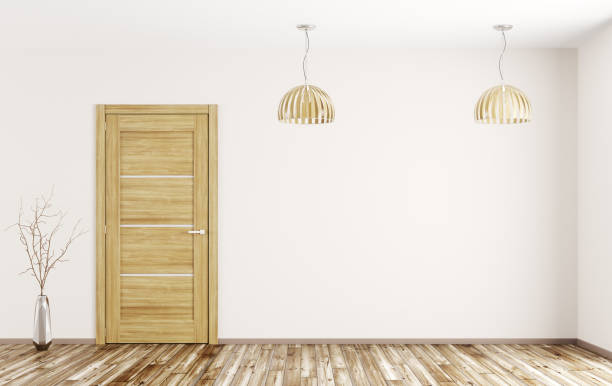
Most people choose interior doors the same way they choose light switches. They pick something that works and fits the budget and move on. The door goes in and the room gets finished and that is that. What gets missed in that approach is how much a door actually does to the way a room feels to be in.
Comfort in a home is not just about furniture or heating or how much natural light gets in. It is about the quality of the boundary between one space and another. A door is that boundary. It controls sound and temperature and privacy and the flow of air between rooms. Get those things right and every room in the house works better. Get them wrong and you live with the compromise for twenty years.
Sound Is the Comfort Factor Nobody Quantifies Until It Is Gone
A bedroom door that does not seal properly lets noise from the hall or the living room bleed through at the level where it is not loud enough to complain about but constant enough to stop you resting properly. A home office door that lets conversation through means every call you take competes with whatever is happening elsewhere in the house.
The difference between a hollow core door and a solid core door in acoustic terms is significant and it is felt rather than measured. Hollow core doors use a cardboard honeycomb or timber grid structure between two thin MDF or timber veneered faces. They are light and they cost less and the sound transmission through them is poor. A voice on the other side reads clearly enough to follow even if the words are not distinct.
Solid core doors use a dense timber or composite core that absorbs rather than transmitting sound. The difference when you close one is immediate. The room quiets in a way that hollow core doors cannot produce. For bedrooms and home offices and bathrooms and any room where privacy or rest matters that acoustic quality changes how the space works in daily use.
Interior doors UK manufacturers produce solid core options across a wide range of styles now and the price premium over hollow core has narrowed considerably as demand has grown. The investment pays back every night.
Temperature and How Doors Shape It Room by Room
Central heating works on the assumption that heat stays where it is put. A poorly sealed door leaks warm air constantly into unheated spaces and draws cold air back from corridors and hallways that sit between the heated rooms of the house.
The seal between a door leaf and its frame depends on the rebate depth the condition of any draught seal fitted into the frame and how well the door sits within the opening over time. Timber doors that have never been properly fitted warp with seasonal humidity changes and leave gaps that are invisible when the door is shut but felt as a cold draught at floor level every time the wind picks up outside.
Well-fitted interior doors with appropriate draught seals hold the thermal boundary between rooms in a way that keeps individual rooms warmer without demanding more from the boiler. In a house where each room is used at different times and temperatures throughout the day that zonal control is genuinely useful. The kitchen can run warm while a rarely used guest room stays cooler without either affecting the other.
This matters more than people expect in older UK housing stock where draughts are a standard feature of the construction rather than a defect. Upgrading interior doors as part of a renovation programme addresses thermal comfort in rooms that no amount of additional insulation in the walls will fix if the door is an open channel for cold air.
Privacy as a Functional Requirement Not a Luxury
The open plan living trend that dominated UK interior design for twenty years pushed the idea that walls and doors were barriers to connection within a home. Families discovered during extended periods at home that open plan spaces work well for socialising and badly for concentration and rest.
A door on a room is not a statement about wanting to be away from the people you live with. It is a tool that lets you control your own environment for the period you need to. A teenager doing homework in a bedroom with a solid well-fitted door is actually less distracted than one in a notionally open space where every sound from the kitchen registers. A parent taking a video call from a home office with a door that closes properly avoids the performance of the rest of the household becoming part of the meeting.
Interior doors UK suppliers have seen demand shift toward solid core and acoustic rated products as people recalibrate what they actually need from interior spaces. The market is responding to real lived experience rather than design theory.
The Visual Contribution of a Door to a Room
Walk into a room and the door you came through is the last thing you look at deliberately. It is also part of everything you are looking at. Doors occupy vertical space in a room and they define the scale of the openings between spaces. The style and finish of a door communicates something about the room it belongs to before you have registered any other detail.
A traditional four panel door in an original Victorian or Edwardian house reads as appropriate in a way that a flush door does not regardless of how cleanly it is finished. The proportions of the panels and the depth of the moulding relate to the architrave and the skirting and the ceiling height in a way that holds the room together visually.
A flush door in a contemporary extension or new build reads as clean and deliberate. The lack of relief works with the flat planes of a modern interior. Paint it in the same tone as the wall and it almost disappears into the room which is exactly what that design intention requires.
Choosing a door that mismatches the architectural language of its room creates a low-level visual friction that most people cannot name but everyone feels. The room never quite settles. The door sits wrong. Replacing it with something that belongs resolves the feeling without anyone being able to explain what changed.
How Door Height Affects the Feel of a Space
Standard UK interior doors run at 1981mm in height which suits rooms with standard 2.4 metre ceiling heights adequately. In rooms with higher ceilings or in older properties with generous floor to ceiling dimensions that standard height creates a visual awkwardness. The door looks undersized for the opening and the proportions of the room work against it.
Tall doors at 2.1 or 2.2 metres or even taller in high-ceilinged properties draw the eye upward and reinforce the verticality of the room. They make a space feel more generous rather than more cramped. They connect the floor to the ceiling in a way that a standard door planted in the same opening does not.
Interior doors UK suppliers stock an increasing range of non-standard heights as demand for taller doors has grown alongside renovation of older housing stock and the rise of self-build projects where the designer gets to specify proportions properly from the start. The difference in cost between a standard door and a made-to-measure taller version is often less than people expect and the visual return is immediate.
The Practical Behaviour of Doors Over Time
A door that works well on the day it is fitted and degrades within two years is not a well-chosen door. It is a door that was either poorly specified for its environment or poorly installed or both.
Kitchen and bathroom doors live in environments with higher humidity than the rest of the house. Solid timber doors in those environments absorb moisture and swell unless they are properly sealed on all six faces including the top and bottom edges before hanging. An unsealed bottom edge on a bathroom door will swell and stick within a year of installation in a family bathroom with regular shower use.
MDF core doors with timber veneer or painted finish handle humidity better than solid timber in those environments because the engineered core is more dimensionally stable. They are also more forgiving of minor misalignment in the frame because they do not change shape across seasons the way solid timber does.
Hardware choice affects practical performance over time as much as the door itself. A hinge that is undersized for the door weight allows the leaf to drop and bind in the frame within a year. A latch with insufficient throw for the frame rebate depth chatters rather than latching cleanly. Getting the hardware specification right at the point of installation is far easier than correcting it afterward.
Replacing Doors as Part of a Wider Renovation
Interior doors rarely sit at the top of a renovation priority list. People replace kitchens and bathrooms and floor coverings and decoration before they think about the doors. What changes when the doors finally get attention is how the whole renovation reads.
A house with new flooring and fresh decoration and original hollow core doors with tired brass handles from twenty years ago has a finish problem that the quality of everything else cannot disguise. The doors are the thing that connects all the other surfaces. They touch the floor and the walls and the ceiling architrave and the condition and style of the door affects how all of those meet.
Replacing interior doors as the last stage of a renovation pulls the whole project together in a way that incrementally updating other elements cannot. The house reads as finished rather than as a work in progress that has been paused.
Final Thoughts
Interior doors do more work in a home than most people credit them with until the moment they live in a house where the doors are right. The acoustic quality of a room. The temperature it holds. The privacy it offers. The visual sense that the space is settled and considered. All of those things are affected by the door in the opening.
The range of options available from interior doors UK manufacturers and suppliers now covers every style period specification and budget point. The decision is worth making carefully rather than defaulting to the cheapest option that fills the gap.
A door that fits the room and the house and the way you actually live in the space repays the consideration every single day. That is not an abstract design benefit. It is the practical reality of living in rooms that work as well as they possibly can.
Frequently Asked Questions
What is the difference between solid core and hollow core interior doors?
A solid core door uses a dense timber or composite material filling the full interior of the door leaf. A hollow core door uses a lightweight frame with a cardboard honeycomb or timber grid structure filling the interior space between two thin facing panels. Solid core doors are significantly heavier and provide considerably better acoustic and thermal performance. Hollow core doors cost less and are lighter to handle but transmit sound easily and offer minimal insulation between rooms.
How do I choose the right door style for my home?
Start with the architecture of the house rather than personal preference in isolation. A period property with original Victorian or Edwardian features suits panel doors with proportions that relate to the existing mouldings. A modern new build or contemporary extension suits flush or minimal panel doors. The door should feel as though it belongs to the building rather than having been chosen from a catalogue without reference to its context.
Can I paint any interior door or do some require specific finishing?
Most interior doors accept paint well provided the surface is properly prepared. Bare MDF needs a primer coat to seal the surface before paint is applied otherwise the paint soaks in unevenly and the finish looks thin. Timber veneer doors can be painted but the grain may read through lighter colours without adequate primer. Factory primed doors are ready for topcoat application with minimal preparation and are a practical choice for anyone who wants a clean painted finish without extensive surface preparation.
What door width do I need for a standard UK doorway?
The most common standard door widths in the UK are 686mm and 762mm for single doors with 838mm used where a wider passage is needed for accessibility. Older properties often have non-standard opening sizes that require doors to be trimmed or ordered to a specific size. Measuring the opening carefully before ordering is essential because a door ordered to the wrong width creates fitting problems that cannot be resolved easily once the door is on site.
How important is the door frame and architrave to the overall result?
The frame and architrave are as important as the door itself to how the finished installation looks. A quality door fitted into a damaged or poorly aligned frame will never sit right regardless of how well the door is made. The architrave covers the junction between the frame and the wall plasterwork and its profile and condition affects the visual quality of the whole opening. Replacing doors without addressing frame and architrave condition is a common mistake that leaves the finished result looking incomplete.
Is it worth buying interior doors from a UK manufacturer rather than importing?
UK manufactured interior doors are built to standard UK sizing which eliminates the non-standard dimensions that some imported products carry. Lead times tend to be shorter and returns or replacements for damaged items are more straightforward to manage. For bespoke sizes or specifications UK manufacturers can modify or produce to order in ways that international suppliers typically cannot accommodate without significant delay and cost.