






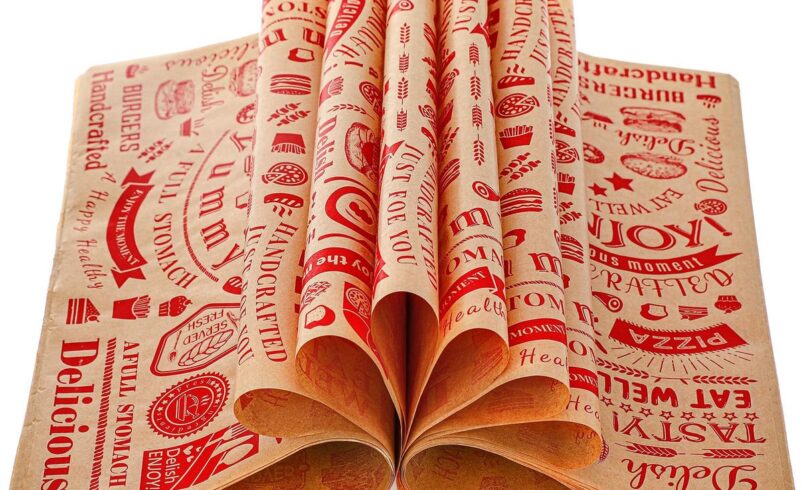
Modern packaging performance is defined by custom hot paper, which is used in food service operations where presentation and heat resistance are important. Custom hot paper is used by brands to ensure a uniform wrapping strength, clean look,k and dependability in handling when in service. The choice of materials determines customer experience and operational efficiency in hectic settings. The expectation of packaging is on the increase in restaurants, cafes, and takeaway joints, where the aesthetic appeal and the sustainability of the packaging are central. To meet these needs, custom hot paper provides the flexibility of forms, surface finishes, and printable capabilities that can be branded. It is incorporated in the daily operations of businesses to wrap, line, and serve. The consistency in quality has been a key focus of all applications of the custom hot paper in various food types and types of service, with guaranteed results in day-to-day operations.
Design Focus
Food packaging depends on surface design, ink stability,y and compatibility of materials as a visual identity. The elements of branding have to be reproduced uniformly in various applications. Perception is influenced by color retention and clarity in the interaction of the service with the customers. Design structures combine the positioning of the logos, positioning of the patterns, and reaction of the materials to temperature. Manufacturing modifications help in the accuracy of print work and the finishing of surfaces. Custom printed hot paper helps in brand awareness in service settings, whilst still performing well in the food handling process. Design planning is in line with operational requirements, where the packaging is representative of brand standards in actual use conditions. Print systems are flexible to various food types and service types. Consistency in production helps in long-term brand recognition of the industry segments that are competitive in general.
Material Study
Durability, heat resistance, and adhesion of printing in packaging are defined by the material composition. Fiber structure will affect flexibility and strength in wrapping. Ink absorption and visual clarity are influenced by surface treatment. Resistance to moisture, heat exposure, and handling stress are performance evaluation factors. Production consistency provides consistency of quality in production batches. Hot wrapping paper provides equalized performance in branding and functionality requirements in food service settings. The material engineering promotes flexibility in the types of food products and serving environments. Quality control mechanisms are stable among production cycles. Interline standardization enhances the efficiency of operations and minimizes variability in the quality of outputs of commercial packaging systems. The integration of material science facilitates production scalability to industry needs at current levels of scale.
Brand Value
The consistency, clarity, and functional reliability are the key determinants of brand perception in food service packaging. Visual presentation creates customer recognition and repeat interaction. The packaging surfaces are used as a communication tool to reinforce identity. The quality of print and material consistency is part of the brand strength. Operational consistency covers the packaging to match set brand standards, the print paper incorporates visual communication objectives in food service settings,s and functional needs in handling and service. The brand alignment spans several product lines and service lines. Consistency is enforced through quality assurance practices in a cycle of production. Market positioning enriches the consistency of packaging identity in the customer touchpoints and service delivery settings. The visual stability and the alignment between the material performance and the recognition with time are dependent on the long-term recognition.
Usage Area
Food service environments demand flexible packaging formats to wrap, line, and serve purposes. The handling of materials and convenience during the peak operations are aspects of operational efficiency. Packaging is flexible to accommodate various types of food and cooking. In direct food contact, heat resistance is a necessity. Workflow integration determines the speed and consistency in service provision. A hot paper roll ensures continuous usage in high-volume settings, where continuous supply is important. The style of application in service formats differs and enhances consistency in operations and presentation of services to customers. Flexibility in materials makes them fit in a variety of food service environments. Standard roll formats across various service stations enhance efficiency in the system. Business continuity at scale levels helps businesses maintain their performance.
Manufacturing Process
Packaging material production systems are based on a controlled process that guarantees consistency in their production. Final product characteristics are defined by stages of material feeding, coating, and cutting. Accuracy in temperature control determines the quality and durability of surfaces. Calibration of equipment helps maintain consistency in batch production. Quality control stations ensure the quality standards are met. Hot paper sheets are used in various packaging purposes, where pre-cut packages enhance handling and service speed. The production processes combine inspection and finishing to guarantee the reliability of products. Process optimization enhances uniformity in the large-scale production settings. Integration of automation is used to increase the speed of production and minimize variability between manufacturing cycles. Quality assurance mechanisms ensure that all levels of output are of similar standards. Process control guarantees stability in the level of production systems.
Quality Control
In manufacturing packaging, quality assurance deals with consistency, durability, and visual accuracy. Material performance is measured in the state of operation by inspection systems. Test procedures evaluate heat resistance, print clarity,y and structural integrity. Standardized evaluation practices make sure that they are in line with industry standards. Variability in the final output is minimized by detecting defects during the process of manufacturing. A hot paper with a logo facilitates branding checking processes in which visual accuracy is a crucial requirement in customer-facing applications. Quality control models combine monitoring of manufacturing levels. Regular production facilitates dependable performance in food service settings. Automation of inspection enhances precision and minimizes manufacturing faults in any given manufacturing setting. Quality systems guarantee consistency in the delivery of the output concerning various service needs. Constant surveillance enhances the reliability of operations. The control of production assures the quality level of consistency within batches.
Business Impact
The packaging solutions affect the operational efficiency, customer satisfaction, and brand positioning within the food service markets. The choice of material influences the cost system and service quality. Reliability in supply is beneficial to sustained operations in various sites. The visual presentation adds perceived value and customer experience. Scalability in production defines the ability to expand the business. Hot wrapping paper serves conditions that need flexible packaging solutions that remain the same when faced with the demands of operation. Unified packaging enhances business performance. Custom paper wholesale the level of competitiveness in the market is based on the reliability of packaging and the quality of presentation. Operational structures improve the efficiency of the services of various business units. The strategic packaging choices enhance market positioning and the strength of the brand over the years. Material performance is a factor of business scalability. The efficiency of operations results in scale growth.
Conclusion
Packaging performance in food service operations, including consistency, branding, and durability, is determined by custom hot paper. The reliability of materials promotes service performance and presentation in harsh conditions. Workflows are based on the standardized packaging solutions that ensure stability of production and distribution phases. Businesses need to cover scalability, visual accuracy, and cost-effectiveness in supply networks. Hot paper wholesale is a technique that enables large package volume procurement plans to be made by companies that have a significant volume of packaging requirements. Unity of regular materials enhances performance output in various service channels. Structured manufacturing and quality control procedures are an advantage to packaging systems. Custom hot paper keeps on supporting the functional branding requirements in food service applications.