


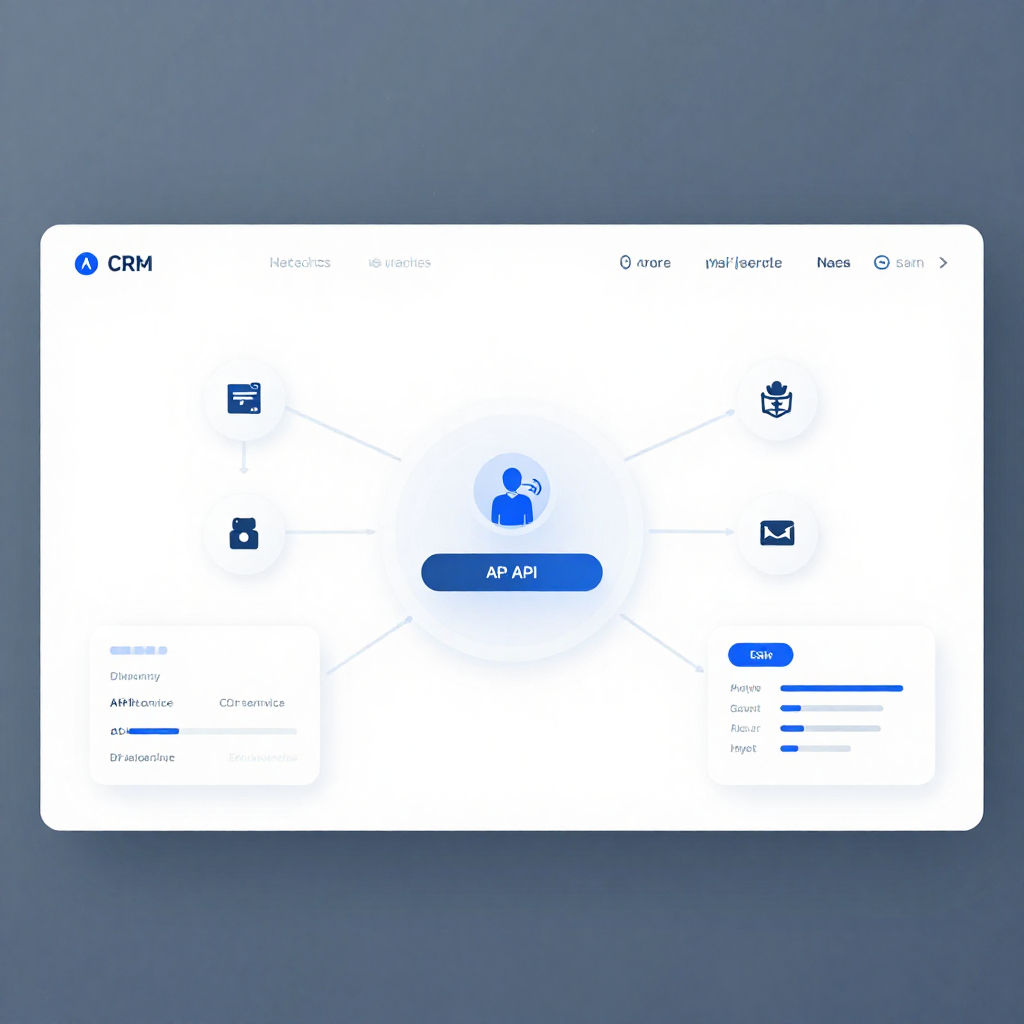




Customer relationship management platforms no longer operate as standalone systems. Modern businesses rely on multiple applications to manage sales, marketing, finance, and customer service. As a result, CRM platforms must connect seamlessly with surrounding technologies to deliver value.
APIs, or application programming interfaces, enable this connectivity. They allow systems to exchange data, trigger actions, and share insights securely. Without APIs, CRM platforms become isolated, limiting scalability and innovation.
As organizations integrate platforms for unified operations, many adopt Salesforce Acumatica Integration to synchronize customer, sales, and financial data. Similarly, APIs form the foundation of future-ready CRMs by enabling flexible connections, real-time updates, and continuous innovation. Their role extends beyond integration to shaping how CRM systems evolve.
This article explores how APIs power future-ready CRM platforms, covering benefits, use cases, architectural principles, challenges, and emerging trends.
Understanding APIs in the CRM Ecosystem
APIs act as communication bridges between software applications. They define rules for requesting and exchanging data. In CRM environments, APIs enable data flow between internal and external systems.
For example, APIs connect CRMs with marketing automation tools, ERP platforms, analytics systems, and customer support software. This connectivity ensures consistent data across the organization.
APIs also support modular system design. CRM platforms expose services that other applications can consume. This flexibility accelerates development and customization.
Why APIs Are Essential for Future-Ready CRMs
Customer expectations evolve rapidly. Businesses must adapt systems quickly to meet new demands. APIs enable agility by allowing quick integration of new tools.
Future-ready CRMs must support innovation without disruption. APIs allow features to be added or updated without rebuilding entire systems.
Scalability also depends on APIs. As organizations grow, APIs support expanding ecosystems without performance degradation.
Without APIs, CRMs struggle to remain competitive in dynamic digital environments.
APIs and CRM Integration Capabilities
Integration remains one of the strongest API use cases. APIs allow CRMs to connect with third-party applications easily.
Sales teams access billing data from ERP systems. Marketing teams sync leads from advertising platforms. Support teams view service histories instantly.
APIs eliminate manual data entry and reduce errors. Automation ensures data accuracy and timeliness.
These integrations create a unified view of customers, improving decision-making and experience delivery.
Enhancing Customer Experience Through APIs
Customer experience depends on consistency and responsiveness. APIs ensure customer data updates in real time across channels.
When a customer interacts on one platform, APIs synchronize that interaction everywhere. CRM profiles reflect current behavior instantly.
APIs also support personalization. CRM systems pull contextual data from external sources to tailor offers and messages.
This responsiveness builds trust and engagement.
APIs and Real-Time CRM Data Access
Real-time data access defines future-ready CRMs. APIs enable instant retrieval and updates of customer information.
Sales representatives access live inventory and pricing data. Support agents see recent interactions immediately.
APIs reduce latency between systems. Faster data access improves productivity and customer satisfaction.
Real-time CRM operations become possible only through efficient API architectures.
Supporting Omnichannel Strategies with APIs
Customers engage through multiple touchpoints. APIs unify these channels within CRM systems.
Web, mobile, social media, and support platforms connect seamlessly. CRM records reflect complete interaction histories.
APIs ensure consistent messaging and service quality. Customers receive smooth experiences regardless of channel.
Omnichannel success depends heavily on API-driven connectivity.
API-Driven CRM Customization and Extensibility
Every business has unique requirements. APIs allow CRMs to be customized without altering core systems.
Developers build custom applications using CRM APIs. These extensions address specific workflows and industry needs.
APIs also support low-code and no-code platforms. Business users create integrations and automations easily.
Extensibility ensures CRM systems remain relevant as business needs change.
APIs and CRM Automation
Automation improves efficiency across CRM processes. APIs trigger workflows based on events and conditions.
For example, a closed deal triggers invoicing in finance systems. Customer complaints trigger support workflows automatically.
APIs connect automation tools to CRM data sources. This integration eliminates delays and manual intervention.
Automation powered by APIs improves speed, accuracy, and scalability.
Security and Governance in API-Driven CRMs
Security remains critical when exposing CRM data through APIs. Strong authentication and authorization controls protect sensitive information.
APIs support token-based security, encryption, and access control policies. These measures ensure data integrity.
Governance frameworks define usage limits and monitoring. Organizations track API performance and usage patterns.
Secure API practices build confidence in CRM ecosystems.
Challenges of API Adoption in CRM Platforms
Despite benefits, API adoption presents challenges. Poorly designed APIs cause performance issues and complexity.
Legacy CRM systems may lack modern API support. Upgrades and refactoring may be required.
Version management also matters. API changes must avoid disrupting existing integrations.
Careful planning and documentation mitigate these challenges.
Best Practices for Building API-Driven CRM Architectures
Design APIs with simplicity and consistency. Clear documentation improves adoption and maintenance.
Use RESTful or event-driven APIs based on use cases. Choose architectures supporting scalability and reliability.
Implement strong security measures from the start. Monitor performance continuously.
Adopt governance standards to manage API lifecycle effectively.
Real-World Example of API-Driven CRM Transformation
Consider a mid-sized manufacturing company modernizing its CRM. Legacy integrations caused delays and errors.
The company adopted API-driven architecture. CRM systems connected seamlessly with ERP, support, and analytics platforms.
Real-time data improved sales forecasting and customer service. Operational efficiency increased significantly.
APIs enabled scalable growth and innovation.
Future Trends Shaping APIs in CRM Platforms
API ecosystems will continue expanding. Event-driven and asynchronous APIs will gain popularity.
AI and machine learning APIs will enhance CRM intelligence. Predictive insights will integrate seamlessly.
Standardization will improve interoperability across platforms. Open APIs will dominate future CRM strategies.
APIs will remain central to CRM evolution.
Conclusion
APIs play a critical role in building future-ready CRM systems. They enable integration, scalability, customization, and real-time operations.
By connecting CRM platforms with broader ecosystems, APIs unlock innovation and efficiency. Customer experience improves through consistency and personalization.
Although challenges exist, best practices ensure success. Secure, well-designed APIs future-proof CRM investments.
In an interconnected digital landscape, APIs are not optional. They are the foundation of modern, adaptable CRM platforms