

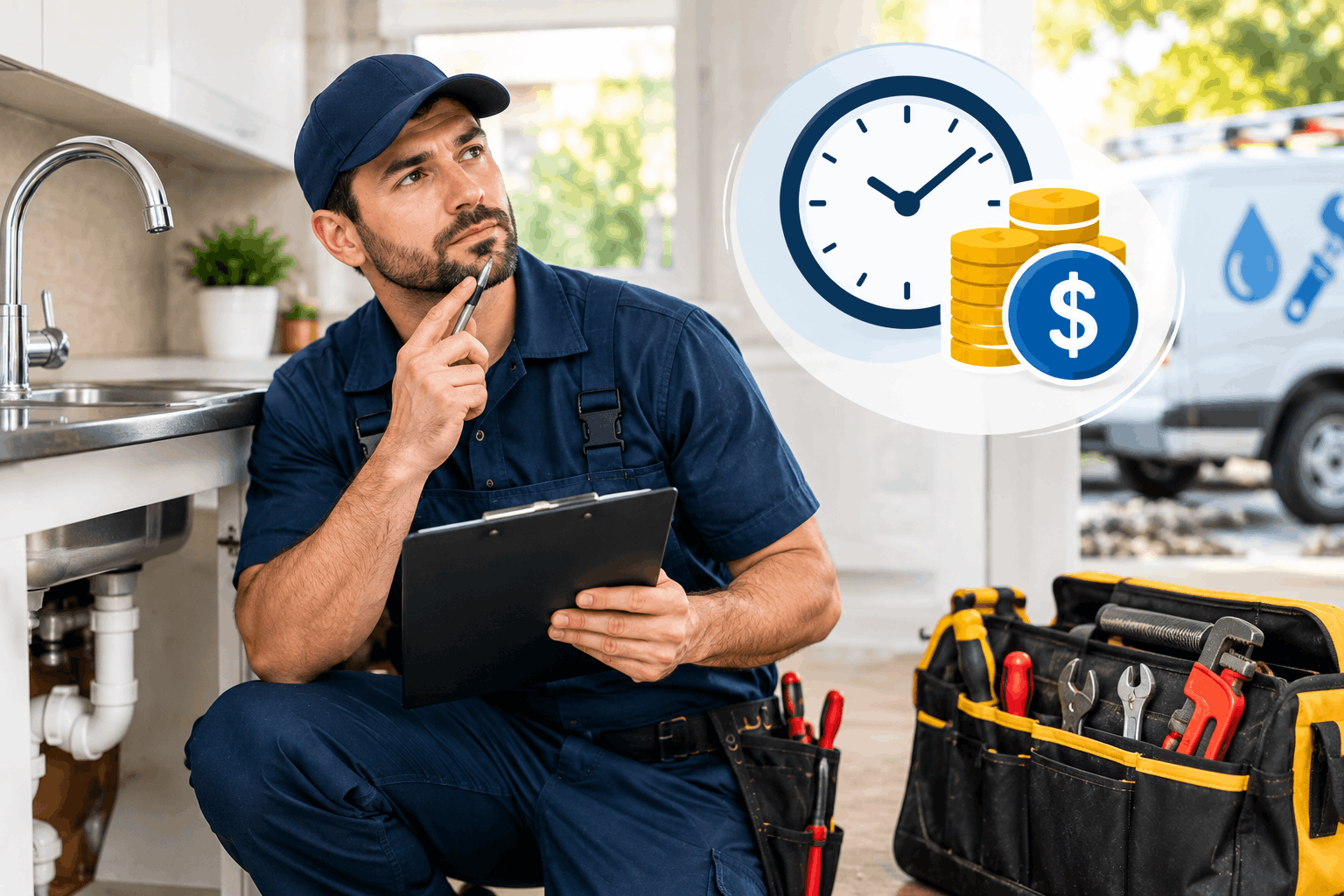




Ever gotten a plumber’s quote and immediately thought, “wait, is that normal?” You’re not overreacting. Hourly rates for plumbing work genuinely swing all over the place depending on where you live, who you call, and what kind of job you’re dealing with. There’s no single magic number that applies everywhere, which honestly makes it tricky to know if you’re being charged fairly or getting taken for a ride.
Let’s break down realistic hourly rate expectations, what actually drives that number up or down, and how to spot when a quote seems reasonable versus when it doesn’t.
Why There’s No Single Universal Hourly Rate
Here’s the thing people often miss: plumbing isn’t a one-size-fits-all service. A simple faucet fix and a full sewer line replacement don’t take the same skill, tools, or risk, so it makes sense that pricing reflects that difference. On top of that, rates vary significantly by region, experience level, and even by which specific company you call within the same city. Comparing a single number you saw online to your actual quote without accounting for these differences is where a lot of confusion starts.
Typical Hourly Rate Ranges You’ll Encounter
While exact numbers shift by location, there are some general patterns worth knowing before you start calling around.
1. Standard Rates for Routine Work
For everyday plumbing repair during normal business hours, think fixing a leaky faucet, unclogging a drain, or replacing a worn part, hourly rates typically fall somewhere in a moderate, predictable range. This is your baseline, non-emergency pricing, and it’s usually where most plumbing maintenance visits land too, since these jobs tend to be quicker and more straightforward.
2. Higher Rates for Emergency and After-Hours Calls
Call someone at 2 AM because a pipe just burst, and expect the hourly rate to climb noticeably compared to a scheduled daytime appointment. This markup exists because emergency response requires a plumber to drop everything and show up outside normal hours, which is a legitimate reason for the increase, not necessarily a scam. Just make sure that emergency rate is communicated clearly before they start, not buried in the fine print afterward.
What Actually Influences the Hourly Number
Knowing what drives the rate helps you judge whether a quote makes sense for your situation.
1. Experience and Licensing Level
A newer, less experienced technician often charges less than a seasoned, fully licensed professional with years of specialized work behind them. That’s not automatically a bad thing, sometimes a less experienced tech is perfectly capable of routine plumbing maintenance, but for anything complex, that extra experience usually justifies a higher rate.
2. Location and Cost of Living
Rates in a major coastal city are naturally going to run higher than rates in a small rural town, simply because overhead costs, licensing fees, insurance, and general cost of living differ so much by region. Don’t assume a quote from a friend three states away tells you anything meaningful about your local pricing.
3. Flat-Rate vs. Hourly Billing**
Some companies charge strictly by the hour, while others quote a flat rate for the entire job regardless of how long it actually takes. Flat-rate pricing can actually work in your favor for plumbing repair jobs that end up taking longer than expected, since you’re not penalized for unexpected complications once work has already started.
A few quick things worth checking before agreeing to any hourly rate:
-
Whether the rate includes a minimum service charge
-
If travel time gets billed separately
-
Whether parts and materials are included or billed on top
-
If there’s a difference between diagnostic time and repair time
Plumbing Repair vs. Plumbing Maintenance: Different Cost Logic
It’s worth understanding that plumbing repair and plumbing maintenance often get priced a little differently, even by the same company. Repair work tends to be reactive and sometimes unpredictable, you don’t always know exactly what’s wrong until someone’s already inspecting the issue, so hourly billing makes more sense there. Plumbing maintenance, on the other hand, is often more predictable since it involves routine, scheduled tasks like water heater flushing or general system inspections, which is why many companies offer flat-rate maintenance packages instead of pure hourly billing for that type of work.
Knowing this distinction helps you understand why your neighbor’s maintenance visit cost differently than your last emergency repair, even from the exact same company.
How to Tell If a Quoted Rate Is Fair
The best way to judge a quote isn’t staring at a single number in isolation; it’s comparing it against a few other quotes from your specific area. Call around, get two or three estimates for comparable plumbing repair or plumbing maintenance work, and you’ll quickly start noticing a general range. If one quote sits wildly outside that range, either dramatically higher or suspiciously lower, that’s worth asking follow-up questions about rather than accepting or rejecting immediately.
Also pay attention to transparency. A fair, established professional will explain their hourly rate structure clearly, including any minimums or after-hours adjustments, without dodging the question or giving you a vague non-answer.
Conclusion
There’s genuinely no single correct hourly rate for plumbing work, since so much depends on your location, the complexity of the job, and whether you’re dealing with routine plumbing maintenance or an unexpected plumbing repair. The best protection against overpaying isn’t memorizing one magic number; it’s understanding what factors into that number and comparing a few real quotes from your own area before committing. Ask questions, get things in writing, and you’ll walk into any plumbing job with realistic expectations instead of just hoping for the best.
FAQs
1. Is hourly billing better than flat-rate pricing?
It depends on the job; flat-rate often protects you on unpredictable plumbing repair work.
2. Why do emergency rates cost more?
After-hours response requires immediate availability, which justifies a higher hourly charge.
3. Does experience really affect the hourly rate?
Yes, more experienced, licensed professionals typically charge more than newer technicians.
4. Is plumbing maintenance cheaper than repair?
Often yes, since maintenance is routine and predictable rather than reactive.
5. How many quotes should I get before hiring?
Two to three quotes usually gives you a realistic sense of fair local pricing.