




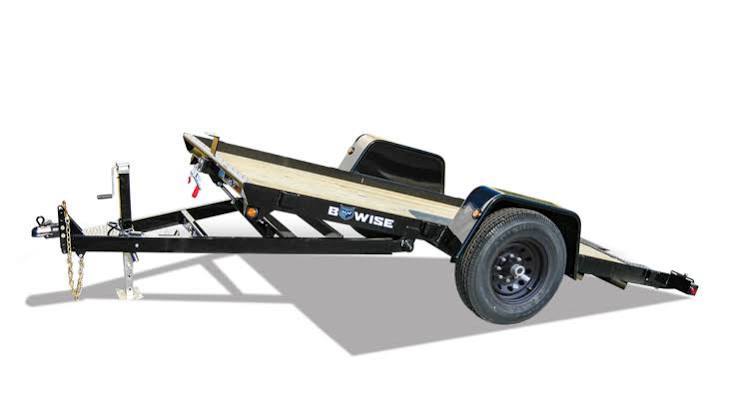

Moving heavy equipment can make loading and unloading one of the more challenging parts of transport. Traditional trailers may require ramps or extra equipment to move machinery onto the deck, adding time and effort. Tilt trailers offer a practical alternative by letting the deck angle toward the ground, creating a smoother loading path for suitable equipment.
Easier Loading and Unloading
The main advantage of a tilt trailer is its loading design. Instead of relying entirely on separate ramps, the deck can tilt to create a gradual incline between the ground and trailer. This can make it easier to load equipment such as compact machinery, landscaping equipment and other wheeled items.
A suitable loading angle can also help operators maintain better control when moving equipment onto the trailer. However, always assess the equipment, trailer, and loading conditions before use.
Less Need for Separate Ramps
Separate ramps can take up storage space and may need to be positioned correctly each time equipment is loaded. A tilt mechanism integrates the loading function into the trailer, making preparation more straightforward.
For businesses that frequently transport equipment, reducing the number of loose components required for loading can also make day-to-day operations more convenient.
Better Access for Different Equipment
Tilt trailers can be useful for wheeled or tracked equipment that can safely travel up the tilted deck. Depending on the trailer design and specifications, they may suit applications across construction, landscaping, maintenance and other industries where equipment needs to be transported regularly.
Before selecting a trailer, consider the equipment’s dimensions, weight, ground clearance, and loading requirements.
Single Axle Tilt Trailer Options
A single axle tilt trailer can be a practical choice when the intended load falls within the trailer’s rated capacity. Its simpler axle configuration can make it suitable for lighter-duty applications where manoeuvrability and ease of towing matter.
However, never select an axle configuration based on convenience alone. The trailer’s aggregate trailer mass, payload capacity, tow vehicle limits and the weight of the equipment being transported all need to be considered.
Efficient for Regular Transport
For operators who regularly move equipment, easier loading can help streamline routine transport tasks. A tilt trailer can reduce pre-loading preparation, while its integrated deck design can provide a practical solution for suitable machinery.
This can be particularly useful when equipment needs to be transported between different worksites throughout the day.
Conclusion
Tilt trailers can simplify loading and unloading heavy equipment by incorporating an angled deck into the trailer design. They can reduce reliance on separate ramps and provide a practical option for regular equipment transport. Whether you’re considering a single-axle tilt trailer or another configuration, always compare the trailer’s dimensions, load capacity, axle rating, and compatibility with the equipment and towing vehicle.